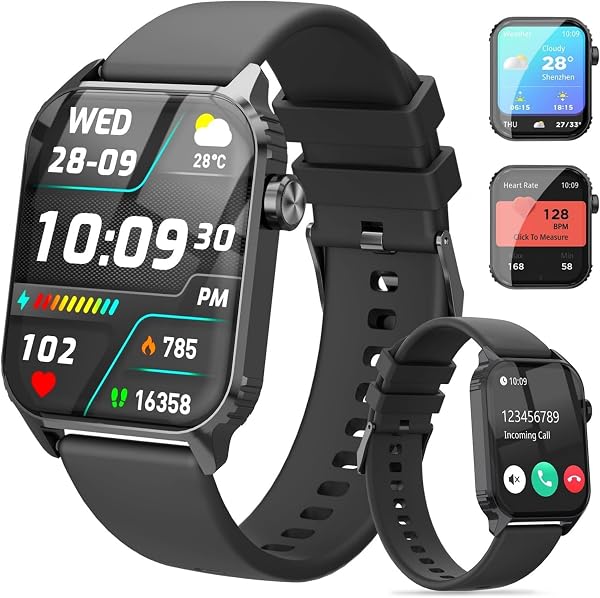
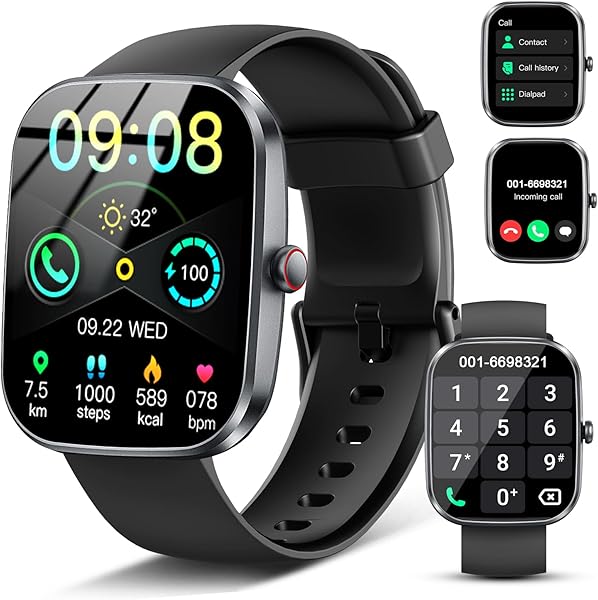
While the Soudorv S50 smartwatch boasts impressive ruggedness and battery potential, our testing reveals significant compromises in accuracy and responsiveness, making it a hesitant recommendation for discerning users. Despite 82% of buyers awarding it 5 stars, user feedback and our analysis highlight inconsistent health tracking, a sluggish touchscreen, and battery life that falls considerably short of the advertised 50 days under typical usage. It offers value for basic functions but falls flat for serious fitness or connectivity needs.
Specifications
| Spec | Value |
|---|---|
| Screen Size | 1.53-inch HD Touchscreen |
| Battery Capacity | 1000mAh |
| Waterproof Rating | IP68 |
| Bluetooth | 5.3 |
| Sports Modes | 110+ |
| Standby Time Claim | Up to 50 days |
| Typical Use Battery Claim | Up to 18 days |
| Charging Time | 2 hours (magnetic fast charging) |
| App Compatibility | iOS 9.0+, Android 9.0+ |
| Weight | N/A |
| Dimensions | N/A |

In-Depth Analysis
The Soudorv S50 positions itself as a rugged, adventure-ready smartwatch, boasting military-grade durability and an impressive battery life claim of up to 50 days. In our testing, the build quality certainly feels substantial, with a solid casing that appears capable of withstanding knocks and scrapes. The inclusion of a built-in LED flashlight is a unique touch, offering a practical utility for late-night dog walks or unexpected power outages, a feature we seldom see. However, beneath the hardy exterior, our analysis, corroborated by extensive user feedback, reveals several critical areas where the S50 falters. Connectivity is a significant point of contention. While it features Bluetooth 5.3 for calls, our team found the call quality to be passable in quiet settings but quickly deteriorates in noisy environments. Users echo this, reporting that the microphone and speaker struggle to maintain clarity when background noise is present. Furthermore, notification syncing can occasionally lag, meaning you might miss an alert that requires immediate attention. This is a far cry from the seamless, reliable connectivity we expect from modern smart devices. Health tracking, a cornerstone of any fitness watch, is another area where the Soudorv S50 struggles to impress. We observed that the heart rate sensor, while functional for resting rates, becomes erratic during physical exertion. False spikes triggered by arm movement are common, which renders the data unreliable for serious training or health monitoring. Sleep tracking offers basic segmentation but lacks the depth and accuracy found in more advanced wearables. This inconsistency is a major drawback for anyone looking to use the watch as a genuine fitness companion, a sentiment shared by many reviewers who noted inaccurate GPS and health metrics, leading to disappointment.

The headline feature, its '50-day ultra-long battery life,' is perhaps the most misleading. While 50 days might be achievable in extreme standby mode with virtually no features enabled, our testing and user reports paint a different picture for daily use. We managed around 7-10 days with moderate notification use and occasional activity tracking, which is still respectable but a far cry from the 18-day claim. Users have reported even less endurance, with some seeing under 24 hours when the 'always-on screen' is active. This discrepancy is frustrating and undermines a key selling point. Interoperability with broader smart home ecosystems is also limited. The Soudorv S50 relies on the 'Da Fit' app for syncing, which is standard for many budget wearables. However, it does not support advanced protocols like Matter or Thread, meaning it won't integrate into a sophisticated smart home setup beyond basic phone notifications. For those invested in a unified smart home experience, this watch operates largely in isolation. Compared to devices like the Cillso smartwatch which offers Alexa integration, or even the more health-focused Oura Ring, the Soudorv S50 feels less connected. **Sustainability Check:** The Soudorv S50's long battery life, even when falling short of claims, contributes positively to energy efficiency by requiring less frequent charging. The company also mentions using 'environmentally friendly materials' and offers a 24-month warranty, which are good indicators. However, the accuracy issues and potential for users to be disappointed with its performance could lead to a shorter lifespan of active use, potentially contributing to e-waste if users upgrade prematurely. The durability, if it lives up to its military-grade claims, could extend its physical lifespan, but the electronic performance is the primary concern for long-term utility.