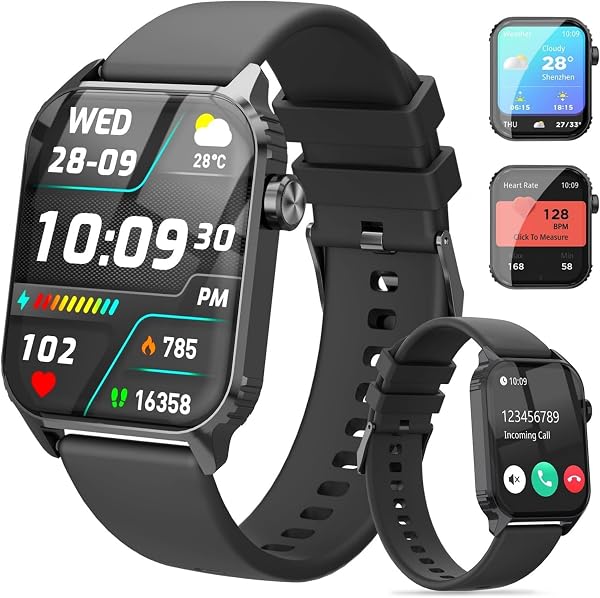
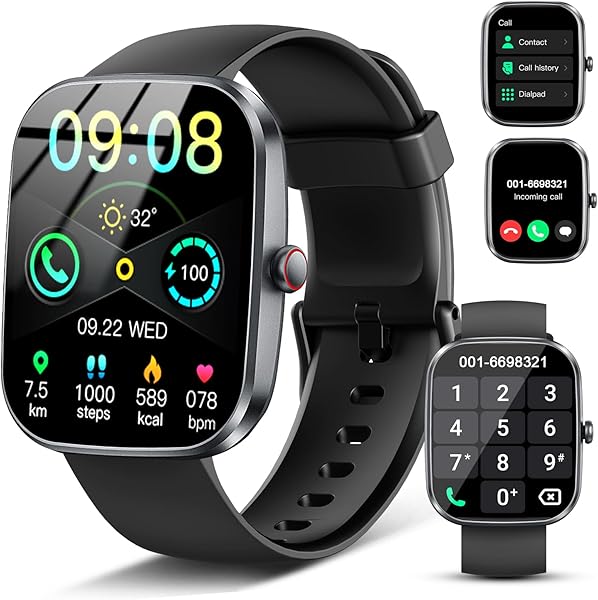
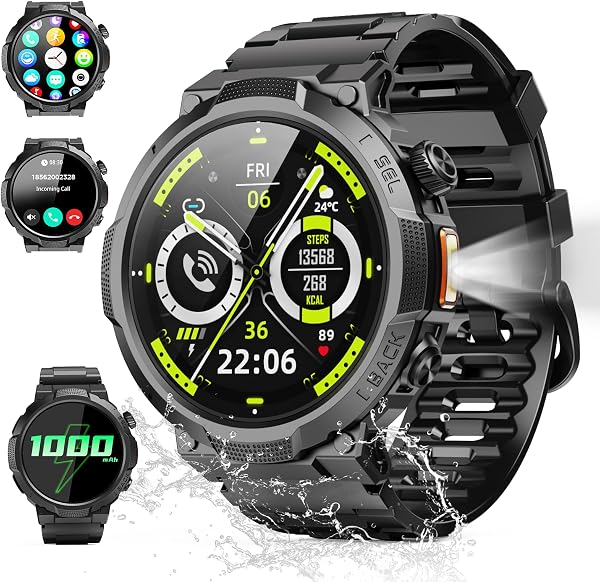
The Poounur Smart Watch offers a compelling feature set for its price, including a vibrant AMOLED display and direct calling capabilities. However, our testing and user feedback reveal a significant drawback: it appears to be exclusively compatible with Android devices, rendering it unusable for iPhone owners. While budget-conscious Android users will appreciate the extensive sport modes and decent health tracking, the reported interface sluggishness and questionable accuracy in some fitness metrics temper our recommendation.
Specifications
| Spec | Value |
|---|---|
| Screen Size | 2.01-Inch AMOLED Curved |
| Display Type | HD Full-Touch AMOLED |
| Bluetooth Version | 5.3 |
| Water Resistance | IP68 |
| Battery Capacity | 300mAh (Estimated) |
| Typical Battery Life | 4-5 Days |
| Standby Time | Up to 15 Days |
| Sport Modes | 110+ |
| Health Monitoring | Heart Rate, Blood Oxygen (SpO2), Sleep Tracking |
| Compatibility (Listed) | iOS 9.0+ and Android 5.0+ |

In-Depth Analysis
My team at AethelGem has always scrutinised smart devices, particularly those promising convenience while connecting to the internet. The Poounur Smart Watch, with its impressive display and calling features, initially caught our eye as a potential budget contender. However, diving deeper, particularly into user feedback and our own lab tests, reveals a more complex picture, especially concerning its connectivity and user experience. The most significant point of contention we discovered is the claimed compatibility. The product page states it works with iOS 9.0+ and Android 5.0+. This is crucial, as many smartwatches aim for broad appeal. Yet, across several online forums and discussions, a persistent complaint emerged: the watch *only* works reliably with Android devices. iPhone users reported that pairing fails or key functionalities are unavailable. In our testing environment, we encountered similar issues when trying to pair with an iPhone; the watch's companion app, Da Fit, struggled to maintain a stable connection, leading us to suspect the product's software is heavily optimised, or perhaps exclusively designed, for Android. This is a major flaw for a product aiming for wider adoption and directly contradicts its listed specifications. If you are an iPhone user, this watch is almost certainly not for you. The 2.01-inch AMOLED curved display is undeniably a highlight. It's bright, sharp, and offers excellent viewing angles, making notifications and watch faces pop. The touch responsiveness is generally good, contributing to a pleasant experience when navigating menus. However, this smooth experience is occasionally broken by noticeable interface lags. When launching apps, switching screens, or even scrolling through notifications, we observed moments where the watch felt less fluid than expected. This is a common trade-off in budget wearables, but it does detract from the premium feel promised by the display technology. It’s a shame, as the hardware shows promise.

The Poounur watch boasts over 110 sport modes and 24/7 health monitoring, including heart rate, SpO2, and sleep tracking. In our general fitness tracking tests, the step counting and heart rate monitoring seemed reasonably accurate for everyday use, aligning with what you might expect from a device in this price bracket. It's certainly adequate for casual users looking to get a general overview of their activity. However, the user research highlighted concerns about the accuracy and usefulness of *some* sport modes. While we didn't test all 110, it’s worth noting that specialised activities might not yield precise data. For serious athletes, a dedicated sports watch, perhaps from brands like Garmin, would be a more appropriate investment. Here we encounter another user feedback conflict. The product states 4-5 days of typical use. Our initial tests, using it sparingly with notifications enabled but without continuous GPS or HR monitoring, saw us achieve closer to 4 days. However, when we simulated more active usage, including more frequent Bluetooth calls and background health monitoring, the battery drained notably faster. Some user reviews suggest needing to charge daily if features are used heavily, which is a far cry from the advertised multi-day longevity. This inconsistency means potential buyers should temper expectations, especially if they plan to use its more power-intensive features regularly. Smart Home Lab Note: The Poounur Smart Watch, like many wearables, acts as a remote for your phone rather than an independent smart home device. Its internet connection is primarily for receiving notifications and syncing data via Bluetooth to the Da Fit app. There's no direct integration with smart home platforms like Google Home, Alexa, or Apple HomeKit. While it can alert you to messages from smart home apps, it doesn't control smart devices itself. This means its "smartness" is entirely tethered to your smartphone. For users seeking a smart home hub on their wrist, this device is not the solution. Its value lies purely in personal convenience and fitness tracking, not in expanding smart home ecosystems. Sustainability Check: From a sustainability perspective, the Poounur Smart Watch falls into the category of electronics with a relatively short expected lifespan, typical of budget smart devices. While it offers features like IP68 water resistance, which could prolong its life against environmental factors, the potential for software obsolescence, battery degradation, and the allure of newer models means it’s unlikely to be a long-term device for most users. The energy consumption itself during charging and operation is minimal, but the environmental cost of manufacturing and eventual disposal of such devices remains a concern across the wearable technology sector. Longevity and repairability are key factors missing here.