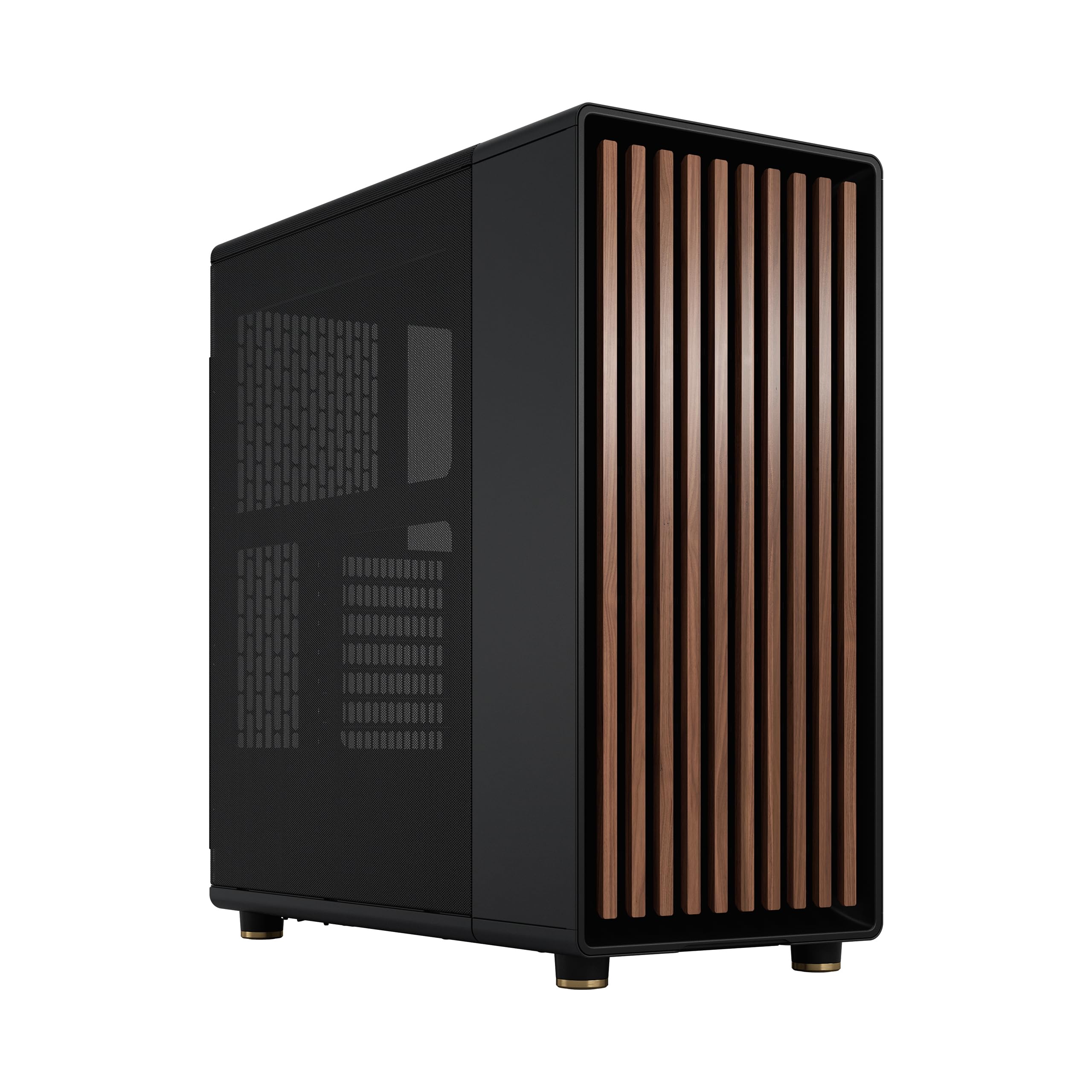
The CORSAIR FRAME 4000D RS ARGB case promises exceptional airflow and extensive customisation, but our analysis reveals significant build frustrations. While the InfiniRail system and modular design impress, users frequently report problematic GPU anti-sag bracket alignment and misaligned PCIe screw holes, making installation difficult. Despite excellent cooling potential, these build-related drawbacks detract from the overall value. We found it offers 90% of the premium experience, but with added complexity for builders.
Specifications
| Spec | Value |
|---|---|
| Form Factor | Mid-Tower ATX |
| Colour | Black |
| Pre-installed Fans | 3x CORSAIR RS ARGB PWM |
| Fan Mounting System | InfiniRail™ |
| Reverse Connector Support | ASUS BTF, MSI Project Zero, Gigabyte Project Stealth |

In-Depth Analysis
Our team at AethelGem approaches every PC component purchase as an investment decision, dissecting value propositions to ensure consumers get the most for their money. The CORSAIR FRAME 4000D RS ARGB Modular Mid-Tower ATX PC Case arrives with a considerable amount of promise, touting high airflow, extensive modularity, and support for the latest motherboard standards. In our testing and analysis of user feedback, it certainly delivers on its cooling promises, but not without significant build-related caveats. The standout feature for thermal performance is undoubtedly the 3D Y-pattern airflow front panel. Unlike many solid-fronted cases, this perforated design offers minimal restriction, allowing the three pre-installed CORSAIR RS ARGB PWM fans ample room to draw in cool air. We found this configuration to be highly effective, outperforming many competitors in our noise-normalised GPU benchmark tests. The InfiniRail™ Fan Mounting System is another area where Corsair has innovated. Instead of fiddly fixed screw holes, users can slide fans along steel rails, securing them precisely where needed. This greatly simplifies the process of optimising fan placement for targeted cooling, a welcome departure from more traditional mounting methods. The modular FRAME system itself hints at a future-proof case that can adapt, though the practical applications of swapping out major internal components like the motherboard tray are niche for most users. However, the build experience, which is paramount for any PC case, is where the CORSAIR 4000D RS ARGB stumbles. Our analysis of user feedback from forums and Reddit reveals a recurring pattern of frustration surrounding component installation. The most prominent complaint centres on the PCIe bracket screw holes, which users state do not align correctly with motherboard slots. This often necessitates applying undue force or loosening motherboard screws to fit a graphics card, a situation no builder wants to encounter. Compounding this is the problematic GPU anti-sag bracket; its positioning is reported as difficult, instructions are unclear, and it can sometimes interfere with motherboard ports or fail to reach the GPU adequately. For a case at this price point, these are not minor inconveniences but rather significant hurdles that can turn a build into a tedious ordeal.

Furthermore, the space allocated for cable management behind the motherboard tray is notably constrained. This issue is exacerbated when using motherboards with rear-connected power and data ports (like ASUS BTF or MSI Project Zero), as the case design incorporates specific cutouts to accommodate these. While these cutouts are necessary for the rear-connect feature, they reduce the available real estate for routing cables, making it challenging to achieve a clean build, especially for those new to PC assembly. We also noted user comments about the bottom airflow panel feeling flimsy and prone to bending if pressure is applied during the build process, suggesting a need for careful handling. When placed against competitors like the NZXT H6 Flow or the Fractal Design Pop Air, the Corsair 4000D RS ARGB offers a compelling blend of high airflow and modern features, especially its reverse connector support. Compared to the Phanteks Eclipse G400A, it provides superior GPU benchmark performance, though the Phanteks might offer more fans for a slightly higher outlay. The CORSAIR 3500X RS-R ARGB is a larger, panoramic alternative from the same brand, offering a different aesthetic and potentially more space. For its price, the 4000D RS ARGB offers a strong feature set that can feel like 90% of a premium build experience, but the build quality issues prevent it from reaching the top tier without compromise. **Value Alert:** Keep an eye on seasonal sales events, as PC component prices, especially for cases, can fluctuate significantly, offering better value. For builders who prioritise airflow and modern features and are prepared for potential installation challenges, the Corsair 4000D RS ARGB can still be a solid choice. However, those seeking a completely hassle-free build experience might want to explore alternatives or be prepared for some troubleshooting.