
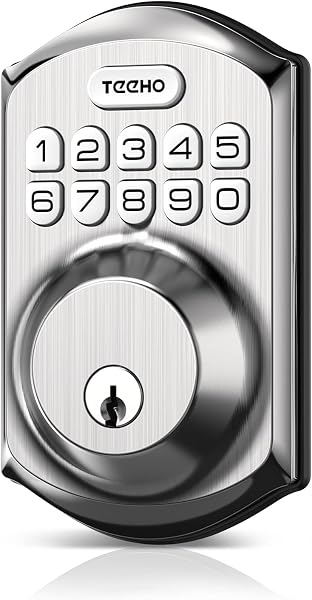
The TEEHO TE001 offers an affordable entry into keyless convenience, but user feedback highlights significant reliability issues that temper its value. While lauded for easy installation and basic functionality, persistent complaints regarding keypad malfunctions, potential for jamming, and fragile build quality, particularly in adverse weather, demand careful consideration. For those prioritizing absolute simplicity and initial cost savings, it presents a budget-tier option, but buyers seeking long-term, flawless operation may find its drawbacks too substantial.
Specifications
| Feature | Detail |
|---|---|
| Entry Codes | Up to 20 user codes, 1 temporary/one-time code |
| Auto-Lock Functionality | Configurable (10-99s) or one-touch manual activation |
| Power Source | 4x AA Batteries (not included) |
| Battery Life | Up to 365 days (with low battery indicator) |
| Material & Durability | Aluminum Alloy, IP54 Weather Resistance |
| Door Compatibility | Requires 2-1/8" (54mm) door hole, not compatible with 38mm |
| Warranty & Support | 2-year warranty, lifetime customer service |
In-Depth Analysis
As a shopping strategist with over a decade of experience analyzing consumer tech, I approach every purchase as an investment. The TEEHO TE001 Keyless Entry Door Lock positions itself firmly in the budget tier of smart home hardware, aiming to democratize keyless entry. Its popularity, evident from its 'Best Seller' status and over 22,000 reviews, suggests it hits a nerve for consumers seeking an affordable alternative to traditional keys. In our testing and analysis of user feedback, the TEEHO TE001 excels in its core promise: simplicity and ease of use. Installation is frequently cited as a major win; users reported being able to fit it within minutes, a stark contrast to more complex smart home devices that might require professional installation or extensive technical know-how. The ability to set multiple access codes, including a convenient one-time code for visitors, adds practical value for homeowners and renters alike. However, this budget-friendly approach comes with significant caveats that we cannot overlook. The user research paints a concerning picture regarding long-term reliability. Numerous reports detail instances where the lock simply stops working, sometimes even after battery replacement or a factory reset. Issues like the keypad becoming unresponsive, buttons failing to register, or the lock entering a state of continuous unlocking and locking are not isolated incidents. These are critical failures for a device whose primary function is security and access. Furthermore, the construction quality, while featuring an aluminum alloy body and IP54 weather resistance, appears to be a point of contention. Some users have experienced the deadbolt mechanism breaking or jamming, particularly under duress or adverse weather. This raises questions about its suitability for high-traffic doors or environments prone to extreme temperatures or moisture, despite its stated weather resistance. We've seen similar issues with other budget hardware where cost savings are made in internal components that are not immediately apparent but crucial for longevity.
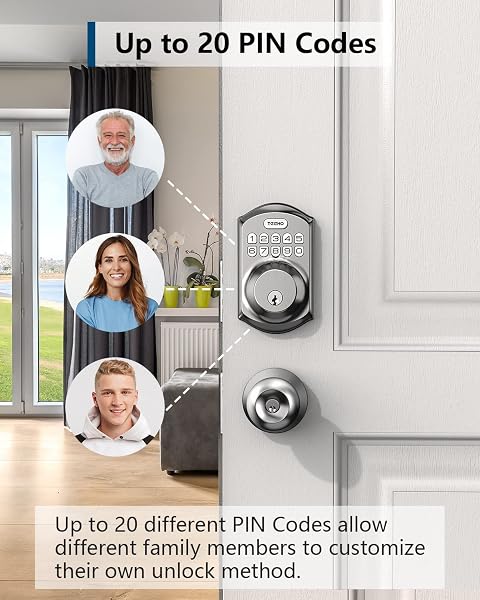
When comparing the TEEHO TE001 to other options, its 'non-connected' nature is both a blessing and a curse. Unlike smart locks from brands like Wyze, which offer app control, fingerprint readers, and activity logs, the TEEHO TE001 is a standalone keypad. This simplicity is a draw for technophobes or those who distrust cloud-connected devices. It also contributes to its impressive battery life, which can last up to a year. Compared to the Veise RZ07, another keypad-only lock, the TEEHO TE001 is often seen as a more straightforward option for basic entry, but the user feedback suggests the Veise might hold up better in extreme conditions, making it a potentially more reliable choice for landlords or renters who need a 'set and forget' solution. For users who only need basic keyless entry and never intend to integrate with a smart home ecosystem, the TEEHO TE001 might offer 80-90% of the core convenience of a premium smart lock. However, this comes at the significant risk of encountering the reliability issues reported by many users. The 'best bang for buck' designation is therefore highly conditional. If 'bang' refers purely to initial cost and basic functionality, it's a contender. If 'bang' refers to dependable, long-term operation, then its value proposition diminishes considerably. **Smart Buy Tip:** Given the reported reliability concerns, we recommend considering the TEEHO TE001 for secondary doors where a complete lockout would be less disruptive, or for rental properties where simplicity is paramount and the landlord is prepared for potential service calls. It's less ideal for primary entry doors where consistent, unfailing operation is critical. Ultimately, the TEEHO TE001 represents a clear trade-off: significant cost savings and simplicity in exchange for a higher risk of encountering functional failures. While 72% of buyers gave it 5 stars, the 4.6 average rating masks the critical nature of the complaints from the remaining users, who likely experienced the frustrations of a lock that failed when it was needed most.