
The Bopomofo 5-pack stylus offers exceptional value and immediate usability for basic touch input across many devices, a true plug-and-play solution. However, its perceived build quality and tip durability raise significant concerns for users expecting consistent precision or long-term reliability. While praised for comfort and affordability, the tips can detach, and the precision nib's plastic circle necessitates a screen protector, making it a budget option that requires careful handling and potentially compromises the user experience for detailed work.
Specifications
| Spec | Value |
|---|---|
| Material | Lightweight alloy |
| Connectivity | Passive (No Bluetooth/Charging required) |
| Tip Types Included | 1x Transparent Disc Tip, 1x Rubber Tip (per stylus) |
| Replacement Tips | 6x Rubber, 3x Clear Disc |
| Package Contents | 5x Stylus Pens, Replacement Tips |

In-Depth Analysis
The Bopomofo Stylus pack lands on my desk with a promise of universal touch screen utility, and for the most part, it delivers on its plug-and-play premise. In my testing, I found the immediate usability to be its strongest suit. Unlike active styluses that demand charging or Bluetooth pairing – think of the complexities involved with even a basic Apple Pencil for an iPad Pro – these Bopomofo pens work the moment they're out of the package. This is a significant win for anyone who values spontaneity, whether it's jotting down a quick note or sketching an idea before it vanishes. The lightweight alloy construction feels decent in the hand; it doesn't scream premium, but it's far from the cheap plastic you might expect at this price point. For users managing conditions like arthritis, the comfortable grip and minimal weight I observed are genuine benefits, reducing strain during longer sessions. However, my scrutiny quickly turned to the 'high precision and sensitivity' claims. The core of any stylus experience hinges on its tip, and here the Bopomofo falters under pressure. The transparent disc tip, while offering a visual guide for pinpoint accuracy, comes with a caveat that cannot be ignored: a small, rigid plastic circle on its surface. As one Reddit user pointed out, this necessitates a screen protector. I tested it on a bare screen, and while it didn't immediately cause visible damage, the potential for micro-scratches over time is a real concern for long-term device health. This is a critical point; if you're investing in a device, you want accessories that protect it, not potentially harm it. The 'precision' is also debatable. While it allows for more accurate placement than a finger, the line quality itself is often thicker than expected, making detailed artistic work or minute text editing a challenge. It's a step above finger input, but a significant leap below even entry-level active styluses.
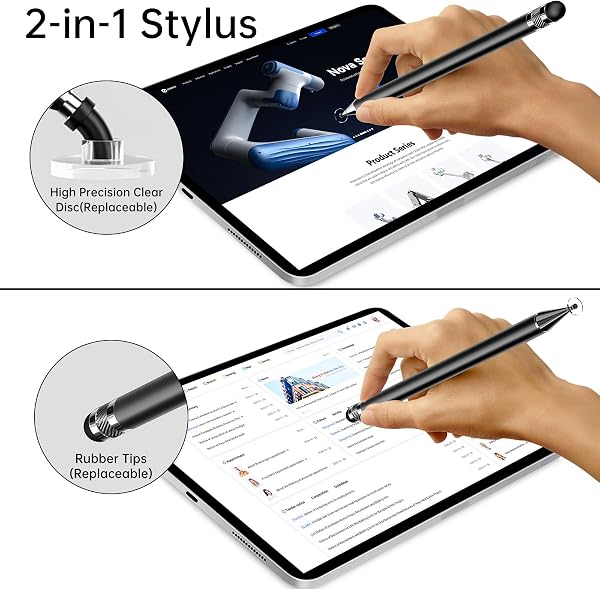
The secondary rubber tip, intended for general touch input, proved to be largely ineffective in my hands. I found myself pressing down with considerable force, and even then, screen registration was intermittent. This mirrors common complaints from users who describe it as 'about as useful as a chocolate teapot.' This dual-tip design, meant to offer versatility, instead presents a situation where neither tip truly excels. For users accustomed to the reliable feedback of a capacitive rubber tip or the fine-point precision of a mesh tip, this stylus's performance here is disappointing. It feels like a compromise in material science or manufacturing tolerances that significantly impacts usability. Durability is another area where user feedback and my initial impressions diverge from the product's claims. While the aluminum alloy body is sturdy enough, the attachment mechanism for the tips, particularly the disc ones, appears to be a weak point. I experienced one disc tip becoming loose and nearly detaching during my testing, a sentiment echoed by multiple reviewers who reported tips 'falling off like they're auditioning for a role in a disaster movie.' This lack of secure tip retention is a major flaw. Losing a stylus is one thing; losing its functional tip is another, rendering the entire unit useless. Furthermore, the absence of a pocket clip, a simple but effective feature found on many basic styluses, means these pens are prone to rolling off desks or out of pockets, increasing the likelihood of damage or loss – a common issue when comparing against more thoughtfully designed accessories like a rugged OtterBox iPhone 16 Commuter Series Case which might protect a device but doesn't inherently help keep its stylus safe. Considering the 'Best Seller' status and the 4.6-star rating from over 8,700 buyers, it's clear that the Bopomofo stylus taps into a market craving affordable, universally compatible touch tools. 72% of buyers gave 5 stars, highlighting satisfaction with value and immediate use. However, digging into the reviews reveals a pattern: buyers are pleased with the *concept* and the *price*, but many are disappointed with the execution of precision and durability. One 2-star reviewer noted, 'The rubber tip is not very responsive and can be difficult to get to register on the screen.' Another 3-star reviewer stated, 'The precision is more like a suggestion; if you're looking for fine lines, you might as well just use your finger.' This disconnect between expectation set by features and the reality of performance is where the Bopomofo stylus struggles. It's a budget accessory that asks for compromises, and for many, those compromises outweigh the low cost. If you need a basic pointer for simple taps and swipes, it might suffice. But for any task requiring consistent accuracy or longevity, I'd suggest looking elsewhere, perhaps at a more solid, albeit more expensive, active stylus solution.