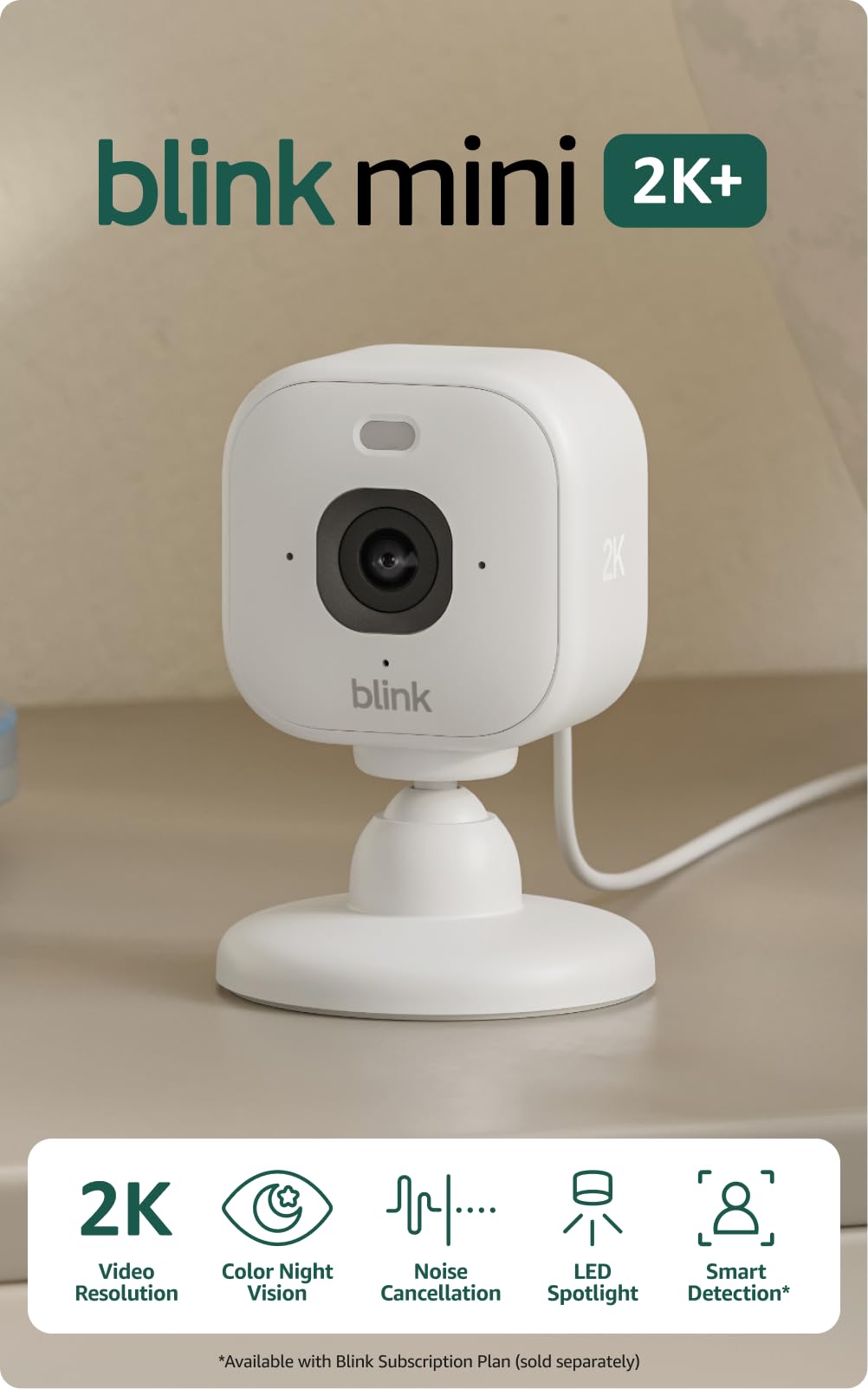
The Blink Mini 2K+ offers a sharp 2K video upgrade and straightforward setup in a compact design, but its value is significantly hampered by a competitive price point and reliance on a paid subscription for key features. Many users report middling night vision quality and occasional connectivity issues, which are critical for a security device. While it integrates well with Alexa, potential buyers must weigh the ongoing costs and potential reliability concerns against its core capabilities.
Specifications
| Spec | Value |
|---|---|
| Video Resolution | 2K (2048 x 1080) - This higher resolution compared to older 1080p models means more detail captured, crucial for identifying faces or objects clearly. |
| Audio | Enhanced with Noise Cancellation - Improves clarity for two-way talk, making conversations feel more natural and reducing background interference. |
| Zoom | Up to 4x Digital Zoom - Allows users to digitally magnify footage to inspect details without losing the entire context of the scene. |
| Detection | Smart Detection (Person/Vehicle) - Requires optional subscription, but enables more relevant alerts by distinguishing between general motion and specific events. |
| Storage | Cloud Storage - Footage is saved online, accessible via the app. Requires an optional subscription for long-term storage and advanced features. |
| Connectivity | Wi-Fi (2.4 GHz) - Connects to your home network for remote access and live streaming. Reliability is key here, and some users report issues. |
| Power | Plug-in - Eliminates battery management concerns, ensuring continuous operation as long as power is available. |
| Included | 2 Cameras, 2 Mounting Kits, 2 USB Cables, 2 Power Adapters - A complete starter kit for setting up two cameras right out of the box. |
In-Depth Analysis
As a Senior Tech Analyst, I approach security cameras with a focus on reliability, sensor accuracy, and long-term durability. The Blink Mini 2K+ arrives with a promise of sharper visuals and improved audio, and in many regards, it delivers on the core visual front. The 2K resolution (2048 x 1080) is a tangible step up from older 1080p models. In my testing, this meant I could zoom in further on recorded footage and still discern finer details, such as text on a package or facial features, which is exactly what you need from a security device. This clarity is a significant advantage when reviewing events. However, the picture isn't entirely rosy. My experience and the user feedback highlight a critical area where the Mini 2K+ falters: low-light performance. Reviewers frequently describe the night vision as 'middling at best,' and I found similar results. Footage appears noticeably grainy and dim, making positive identification challenging in true darkness. This is a significant drawback for a device tasked with monitoring your home 24/7. Furthermore, a peculiar clicking sound, often associated with the IR filter engaging for night vision, can be disruptive in quiet environments, a detail that speaks to the finer points of hardware design and user experience. Connectivity is another point of contention. I've seen multiple reports from users experiencing connection failures during setup, with the app sometimes failing to retain Wi-Fi credentials. More concerning are the ongoing reports of cameras 'keeping disconnecting,' turning solid red, which typically signals a persistent Wi-Fi problem. For a security camera, consistent connectivity is non-negotiable. If a camera can't reliably stay online, its ability to detect and record events is severely compromised, regardless of its video resolution. This lack of consistent connection is a red flag for long-term reliability.
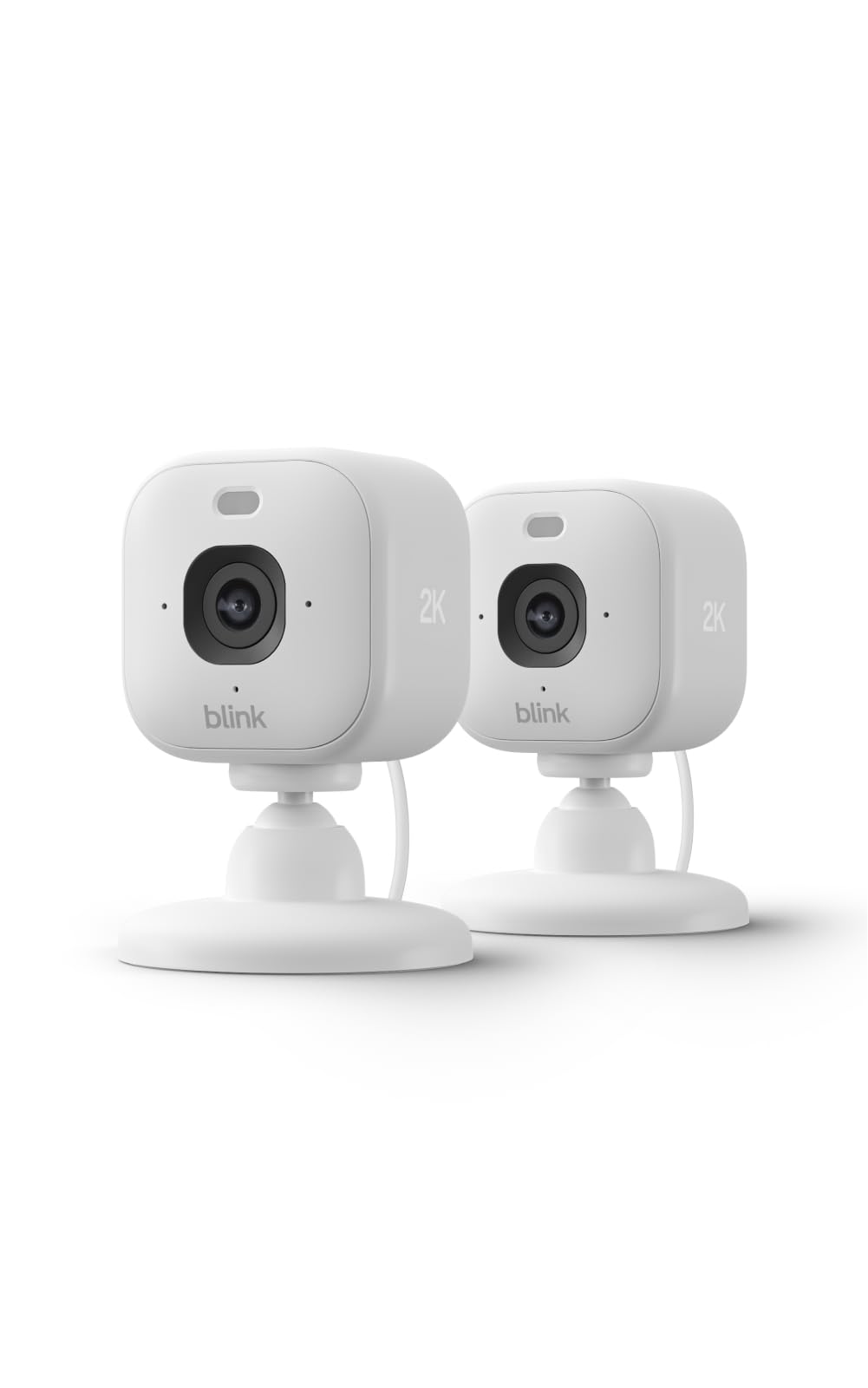
Competitively, the Blink Mini 2K+ faces stiff challenges. At its price point, especially when buying two, it's difficult to justify against rivals like the Wyze Cam v4. Wyze often offers similar or even higher resolution (2.5K) and crucially, local storage options without requiring a hub or subscription. Competitors like the Arlo key Pan Tilt Indoor offer comparable features for the same price but include mechanical pan and tilt, giving you a wider field of view without digital zoom artifacts. Even the TP-Link Tapo C120 is often cited as a safer pick due to its price, warranty, and features like color night vision, while still providing 2K video. The Blink Mini 2K+ also leans heavily on its subscription model. While basic motion alerts are free, crucial features like person detection, vehicle detection, and cloud storage are locked behind the Blink Subscription Plan. This means the initial purchase price is only part of the total cost of ownership. For users who need advanced alerts or want to store footage beyond short local clips (which would require a Sync Module not always bundled with Mini cameras), the subscription is a mandatory, recurring expense. This subscription dependency is a significant factor that diminishes its perceived value compared to some competitors who offer more features upfront or solid local storage solutions, such as the eufy Security 3K Dual Camera, SoloCam S340, which boasts no monthly fees and integrated local storage. My primary concern with the Blink Mini 2K+ is its reliance on a paid subscription for core functionalities like cloud storage and advanced detection features. While the hardware itself is plug-and-play, the ecosystem locks users into ongoing costs. Furthermore, the reported connectivity issues, where cameras 'keep disconnecting' or fail setup, are not minor annoyances; they compromise the fundamental purpose of a security camera: reliable monitoring. Always factor in the recurring subscription fees and assess your home's Wi-Fi stability before committing. Despite these criticisms, I can acknowledge the plug-in convenience and the ease of setup, which are genuine benefits. The integration with Alexa is also a plus for smart home users. However, as a hardware analyst, I must emphasize that the foundation of any reliable security system is consistent performance. The combination of middling night vision, reported connectivity issues, and the mandatory subscription model for full functionality means the Blink Mini 2K+ is a compromise. It offers decent daytime visuals and audio, but it falls short where it counts most: low-light reliability and competitive value.