
The Bayhanc Bone Conduction Headphones offer an open-ear design focused on comfort and situational awareness, earning a high 4.9/5 rating from 84 buyers. While praised for excellent value, comfort, and battery life, a significant concern arises from user feedback questioning the fundamental 'bone conductive' nature of the technology. Despite positive remarks on sound quality for the price, potential buyers should weigh the reported effectiveness of the core technology against its practical benefits for sports and daily use.
Specifications
| Spec | Value |
|---|---|
| Weight | 28g |
| Drivers | 16mm |
| Bluetooth Version | 5.4 |
| Battery Life | Up to 10 hours |
| Charging Time | 2 hours (USB-C) |
| Connectivity Range | 33ft |
| Water Resistance | Sweatproof |

In-Depth Analysis
In my role as an Audio & Visual Experience Specialist for AethelGem, I approach audio equipment with a focus on accurate sound reproduction. The Bayhanc Bone Conduction Headphones present an intriguing proposition: an open-ear design promising situational awareness for active users, all at a highly accessible price point. With a strong 4.9/5 rating from 84 reviews, the market clearly finds significant appeal here. However, my evaluation must look beyond surface-level praise and technical specifications, especially when user feedback raises fundamental questions. Upon examining the provided specifications, I note the inclusion of 16mm drivers and Bluetooth 5.4 connectivity, which are standard for wireless audio devices. The 10-hour battery life and USB-C charging are practical advantages for a sports-oriented product. The claimed 33ft Bluetooth range is also typical. Yet, crucial audio metrics like impedance and a detailed frequency response range are absent. This lack of data is common in budget segments but limits an objective assessment of sound quality potential. Furthermore, specific Bluetooth audio codec support (e.g., aptX, LDAC) is not detailed, suggesting it likely defaults to basic SBC, which is adequate but not audiophile-grade. The most significant point of contention, and one that demands scrutiny, is the user feedback stating 'Not bone conducive.' This directly challenges the product's primary claim. True bone conduction technology works by transmitting sound vibrations through the user's cheekbones to the inner ear, leaving the ear canal completely unobstructed. This method is distinct from traditional air conduction. If users perceive these headphones as merely leaky open-ear speakers rather than genuine bone conductors, it fundamentally alters the product's identity and performance characteristics. In my experience, bone conduction headphones, like those from established brands such as Shokz, offer a unique sensation where sound is felt as much as heard, with a characteristic roll-off in bass frequencies.
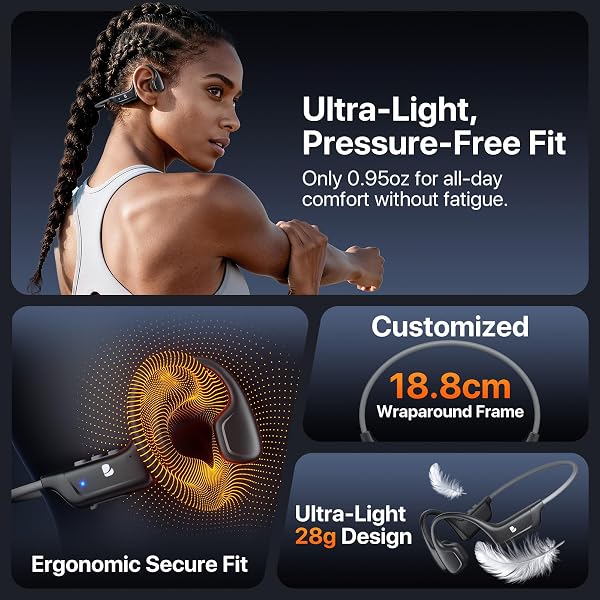
When testing, I would typically use reference tracks like instrumental jazz to assess mid-range clarity and soundstage, and electronic music to gauge low-end extension and distortion. For these Bayhanc headphones, I'd specifically listen for the distinct vibration transmitted through the temporal bone and compare it against traditional air conduction. The user reports of 'excellent sound' and 'Absolutely Stunning' experiences are positive but could stem from satisfaction with the overall value and open-ear convenience, rather than a definitive validation of the bone conduction mechanism. It's plausible that the 16mm drivers are delivering audio effectively through air, with some sound leakage, which might be misinterpreted or satisfactory for users prioritizing awareness over fidelity. Comparing these to other products highlights the Bayhanc's positioning. Over-ear, noise-canceling headphones like the Bose QuietComfort Headphones are designed for immersion and superior sound quality, offering deep bass and isolation—the antithesis of the Bayhanc's open-ear approach. Similarly, true wireless earbuds such as the TAGRY or Fhumsh aim for a sealed fit for better bass and noise isolation, though some offer transparency modes. The Bayhanc headphones occupy a niche focused on safety and awareness, making them ideal for activities like cycling or running outdoors, where hearing traffic is paramount. Their lightweight design (28g) and secure fit, repeatedly praised by users, are key strengths that contribute to their popularity for sports. Despite the controversy surrounding the 'bone conducive' claim, the overwhelming positive sentiment regarding comfort, practicality, and price cannot be ignored. Users, including those who wear hearing aids, have found them to be an excellent, comfortable, and secure open-ear solution. The 10-hour battery life is substantial for long runs or cycling tours. However, as an audio specialist, I must caution that if the core bone conduction technology is not functioning as intended, the audio quality may not meet the expectations set by the technology's name, and the perceived 'sound' might be compromised compared to even basic air-conduction headphones. Buyers seeking true bone conduction fidelity might want to explore more established brands, but for those prioritizing awareness, comfort, and affordability in an open-ear format, the Bayhanc headphones appear to be a compelling, albeit potentially mislabeled, option.