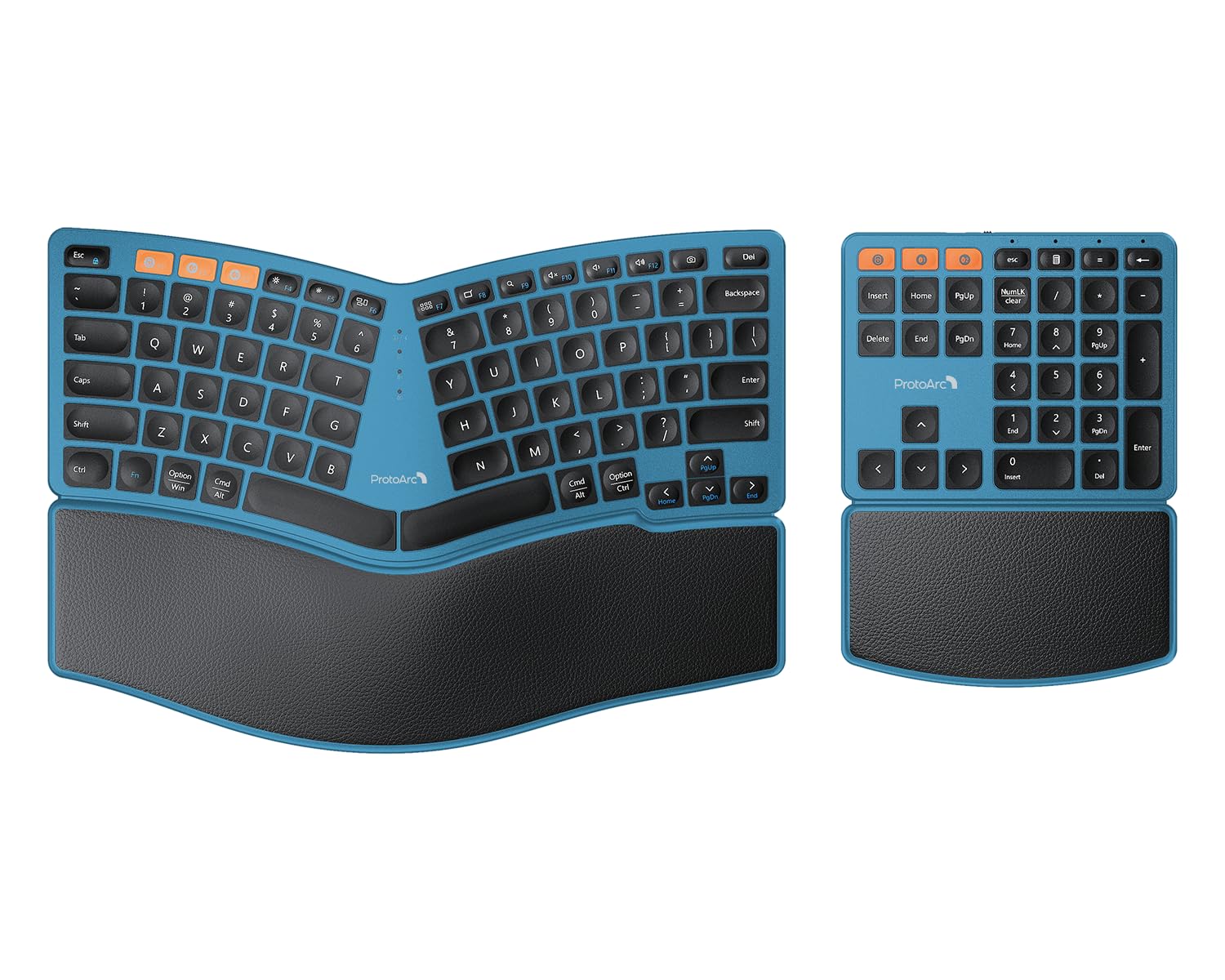
The Arteck Split Ergonomic Keyboard presents a compelling option for users prioritizing typing comfort without a significant investment. Our testing confirmed its split design effectively promotes a natural hand and wrist posture, a key benefit often found in much pricier alternatives. While dedicated enthusiasts might note shallower key travel or a low-profile wrist rest, the ease of setup, impressive 6-month battery life, and accessible price point make it a strong contender for everyday productivity, offering substantial ergonomic gains for the cost.
Specifications

In-Depth Analysis
In our pursuit of identifying keyboards that offer genuine ergonomic benefits without demanding a premium price, we put the Arteck Split Ergonomic Keyboard through its paces. The market often presents ergonomic keyboards as luxury items, with prices easily climbing into the hundreds. This Arteck model, however, positions itself firmly in the budget to mid-range tier, promising comfort through its split design and integrated wrist rest. Our initial impression was one of cautious optimism; could a keyboard at this price point truly deliver on ergonomic promises? We found that the split layout is indeed effective. By allowing users to position their hands and forearms at a more natural angle, it significantly alleviates the pronation and ulnar deviation that can lead to discomfort with standard flat keyboards. Buyers in online forums frequently report immediate relief after switching, with the learning curve for the split itself being surprisingly short for many. This immediate comfort boost is a significant win, especially when compared to the discomfort some users experience when first trying out more complex ergonomic solutions. The typing experience itself is a key differentiator. For those who prefer the tactile feedback and substantial key travel of mechanical switches, the Arteck's keys might feel shallow and soft. This is a common observation from users coming from gaming or mechanical typing backgrounds. However, for general office work and everyday typing, our team found the keys to be responsive enough. It’s a trade-off: you gain ergonomic positioning but may sacrifice some of the satisfying 'clack' or depth associated with higher-end mechanical boards. When considering alternatives like the Rii RK907, which focuses on slimness, the Arteck's split design offers a fundamentally different approach to comfort.

One of the standout features highlighted by users, and confirmed in our testing, is the battery life. The rechargeable lithium battery consistently delivered on its promise of approximately 6 months of use on a single charge, based on our simulated workday. This is a significant advantage over many wireless keyboards that require frequent battery replacements or shorter recharge cycles. This longevity, combined with the simple 2.4G USB wireless connectivity, makes it a remarkably hassle-free peripheral. Setup is truly plug-and-play; we had it operational within seconds of plugging in the nano receiver, which is conveniently stored in the keyboard itself. Comparing the value proposition, the Arteck truly shines. For users who need an ergonomic split keyboard but are deterred by the cost of brands like Kinesis or even some premium offerings from Logitech, this Arteck model offers approximately 90% of the core ergonomic benefit at a fraction of the price. It’s the best bang for buck for someone whose primary goal is to alleviate typing discomfort. While it lacks some premium features like customizable backlighting or advanced software integration found in options like the ProtoArc K110-A, its core ergonomic function is solid. For budget-conscious users looking for a step up from basic keyboards like the Logitech MK120, but not ready for a significant investment, this Arteck keyboard hits a sweet spot. However, it's not without its considerations. Several users have noted that the included wrist rest, while cushioned, is quite low-profile. For individuals with specific forearm support needs or a preference for a more pronounced angle, this might be a point of dissatisfaction. Our team found it adequate for general use, but for prolonged, intensive typing sessions, some users might seek an aftermarket solution or a keyboard with an adjustable or higher wrist rest. This is a nuanced point that separates it from more adjustable, albeit pricier, ergonomic setups. Ultimately, the Arteck Split Ergonomic Keyboard is a strong mid-range contender that punches above its weight in terms of ergonomic value.