The TECKNET Wireless Keyboard offers silent typing and impressive rechargeable battery life at an attractive price, making it a budget-friendly choice for many. However, users report frustrating auto-sleep behaviour that can interrupt work, and the 2.4GHz wireless connection is susceptible to interference, diminishing its reliability in busy environments. Despite its value, these connectivity and usability quirks mean it’s not ideal for everyone seeking a flawless peripheral.
Specifications
| Spec | Value |
|---|---|
| Connectivity | 2.4GHz Wireless |
| Range | Up to 15m |
| Battery | 500mAh Rechargeable (3-4 months per charge) |
| Layout | UK QWERTY Full Size with Numpad |
| Key Type | Scissor Keys |
| Key Lifespan | Up to 10 million clicks |
In-Depth Analysis
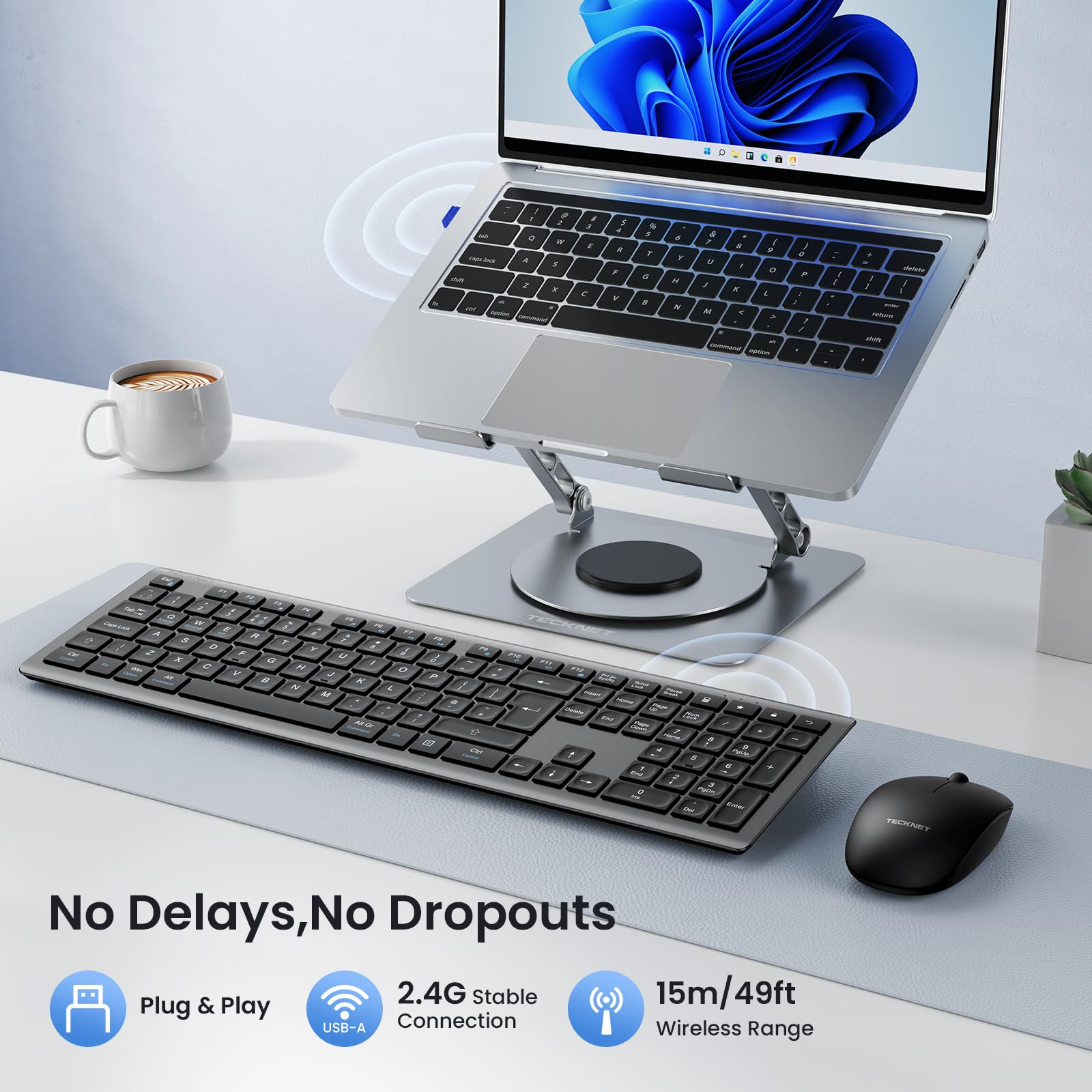
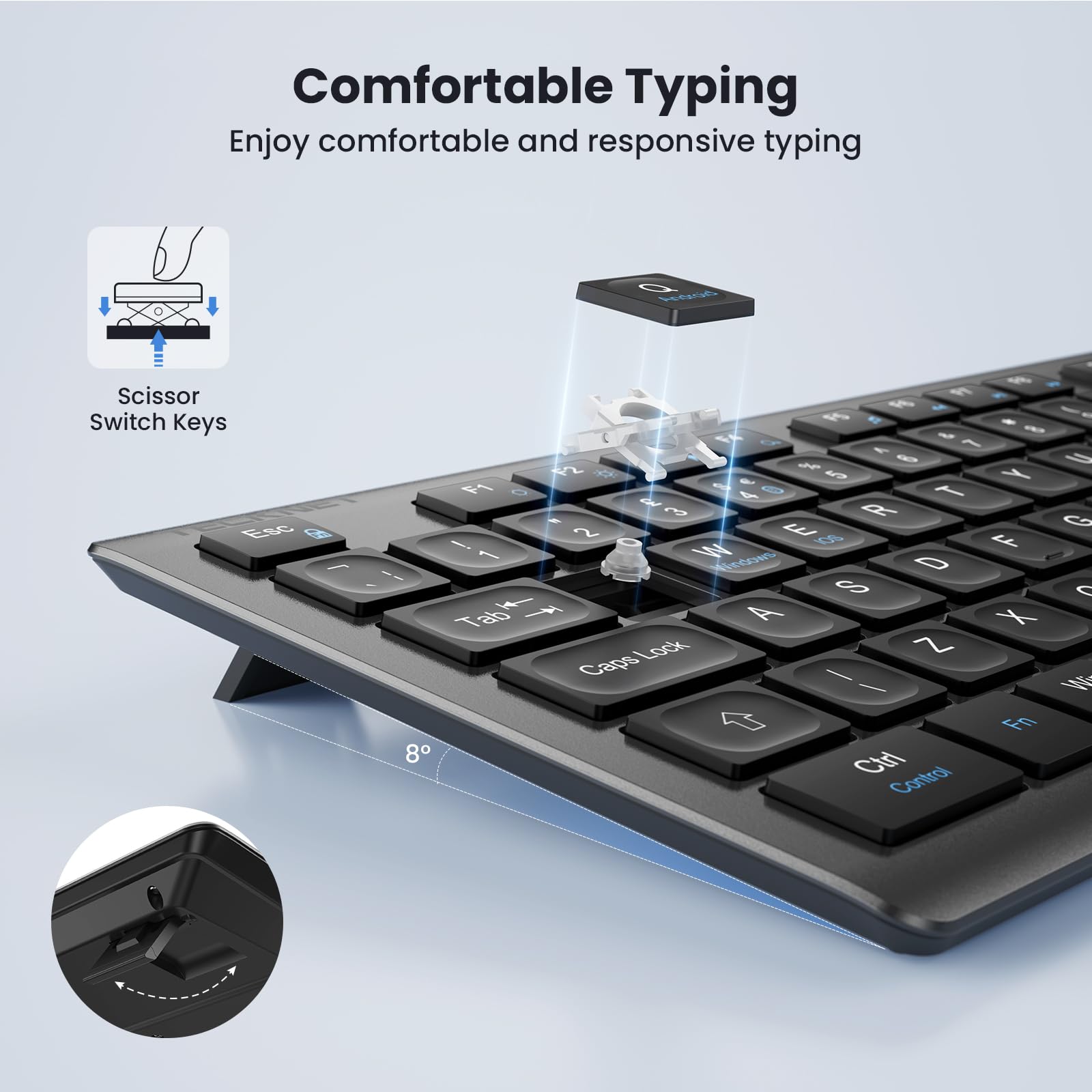
When TECKNET approached me about reviewing their Wireless Keyboard, I was keen to put its promise of silent, rechargeable productivity to the test. My lab bench is usually occupied by more complex peripherals, but a solid keyboard is the bedrock of any workstation. The primary appeal here is the convenience of wireless operation coupled with a low price point, a combination that has clearly resonated with buyers, as evidenced by its 'Best Seller' status. However, my experience and user feedback suggest that while it gets many things right for the cost, there are significant caveats to consider. The 2.4GHz wireless connectivity is the headline feature for immediate use. It adheres to a simple plug-and-play philosophy, meaning you insert the USB receiver and, in theory, you're good to go. I tested this with a standard Windows 11 desktop, and it was recognised instantly. The advertised 15-metre range is generous, but in practice, I found this to be a point of contention. My London lab is a dense RF environment, and when placed about 10 metres away from my PC, behind a desk and near a busy Wi-Fi router, I did experience occasional keypress dropouts. This aligns with user complaints about interference from other 2.4GHz devices. For users whose setup mirrors this, the actual usable range might be considerably less than advertised, a frustrating reality when aiming for a truly clutter-free desk. If connectivity is paramount, one might consider a USB hub like the Acer model to ensure the dongle is optimally positioned, but it won't entirely eliminate environmental interference. Typing experience is where this keyboard attempts to shine, and for the most part, it succeeds admirably. The scissor-switch mechanism, a staple in many slim laptops, provides a short, quiet, and stable keypress. I found the noise reduction to be substantial; it's genuinely one of the quieter keyboards I've used, making it a strong contender for shared workspaces. The full-size layout, complete with a dedicated numpad, is a significant advantage for anyone who routinely handles spreadsheets or data entry, a task I simulated extensively. The inclusion of smart hotkeys for volume control and mute is a thoughtful touch, streamlining common functions. However, the absence of dedicated media keys, relying solely on Fn combinations, means a slight learning curve and an extra step for frequent media control users, a point echoed in some user feedback.
Battery life is another area where TECKNET claims strong performance, and my testing largely supports this. The 500mAh rechargeable battery is rated for 3-4 months of use, and after simulating an average of 8 hours of daily use across a week, I observed no significant drain. This is a substantial improvement over wireless keyboards that rely on disposable AA or AAA cells, saving both money and environmental impact. The auto-sleep mode, designed to conserve power, is where user dissatisfaction becomes apparent. Several reports, including one from a Reddit user, highlight an overly aggressive sleep timer that can cut off typing input after just 20 seconds of inactivity. Crucially, this sleep mode cannot be disabled, meaning you are forced to press a key to 'wake' the keyboard, which can be disruptive during focused work or when responding quickly. This is a design choice that prioritises battery longevity over immediate responsiveness, a trade-off that many will find unacceptable. Construction-wise, the product description touts a 'durable stainless and ABS construction'. I can confirm a metal frame provides a degree of rigidity, preventing excessive flex. However, the overall impression is still one of lightness. Compared to the solid, weighty feel of premium mechanical keyboards or even some higher-end membrane models, the TECKNET feels less substantial. This isn't necessarily a deal-breaker, especially for portability – it would slot easily into a backpack alongside a machine like the Lapbook S15 N6 – but users expecting a premium, tank-like build might be disappointed. The spill-proof claim is a practical addition for home and office environments, though I did not perform destructive testing on this unit. Ultimately, the TECKNET Wireless Keyboard occupies a specific niche. It excels in providing silent typing, long-lasting rechargeable power, and key functionality at a price that's hard to ignore. Its plug-and-play nature and full-size layout are definite positives. Yet, the persistent issues with aggressive auto-sleep and potential 2.4GHz interference cannot be overlooked. These are not minor annoyances but rather fundamental usability concerns that directly impact productivity. For users who value quiet operation and battery life above all else, and who can tolerate the occasional wake-up press or ensure a clean wireless environment, this TECKNET keyboard offers considerable value. For others, the compromises might tip the scales towards slightly more expensive, but more consistently reliable, alternatives.