Our team found the HP OfficeJet Pro 8125e presents a compelling feature set for its price, including duplex printing and an ADF. However, a significant number of buyers report frustrating setup experiences, mandatory HP Instant Ink commitments, and concerns about long-term reliability, including potential remote printer disabling. While some users praise its value, the prevalence of these issues means it's a purchase that requires careful consideration of the HP ecosystem.
Specifications
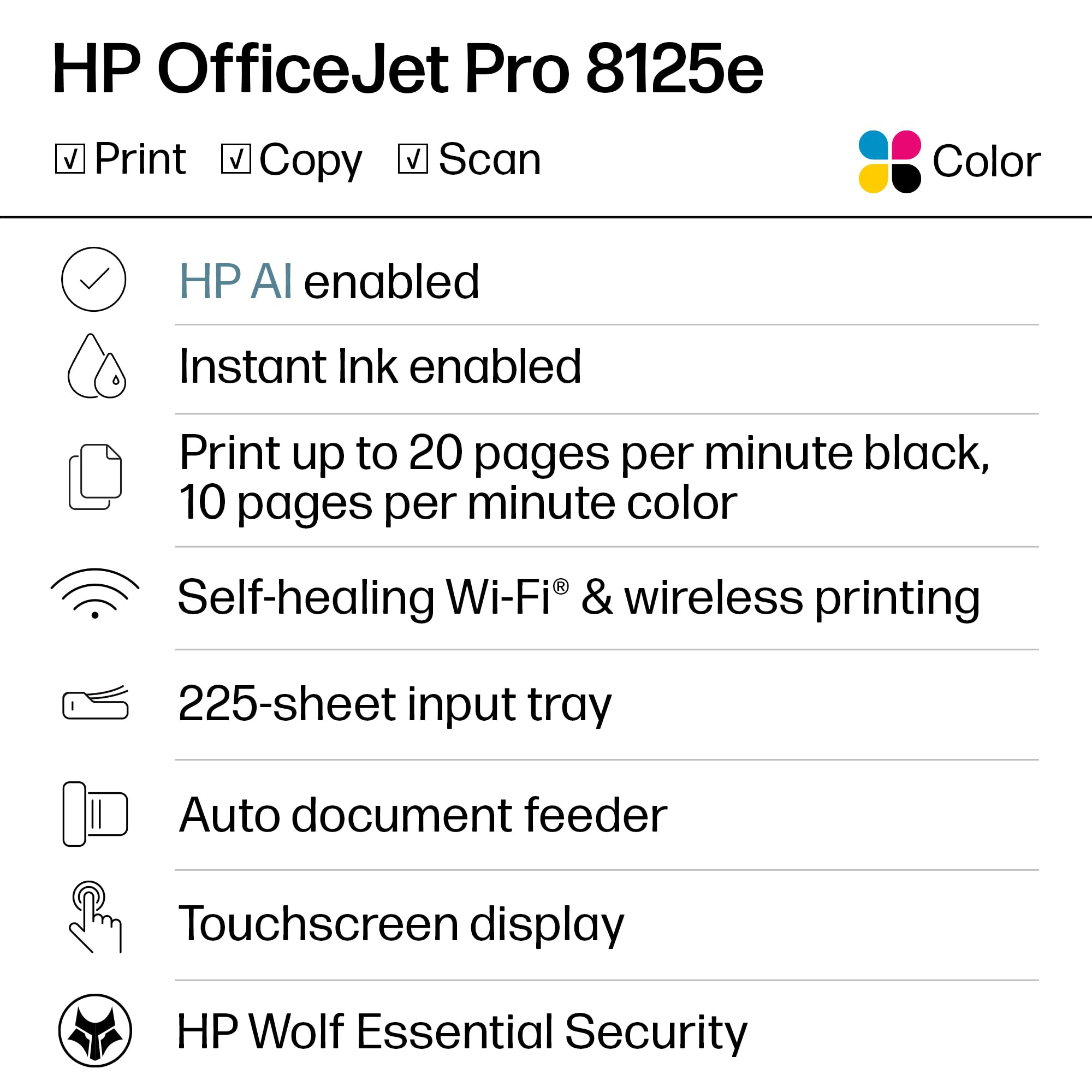
| Spec | Value |
|---|---|
| Print Speed (Black) | Up to 20 ppm |
| Print Speed (Colour) | Up to 10 ppm |
| Input Tray Capacity | 225 sheets |
| ADF Capacity | 35 sheets |
| Connectivity | Ethernet, Hi-Speed USB 2.0, Wi-Fi 802.11 a/b/g/n/ac (dual band) |
| Instant Ink | Eligible |
In-Depth Analysis
When we evaluate a piece of technology, we always consider its long-term value as an investment. The HP OfficeJet Pro 8125e arrives with the promise of being a capable all-in-one solution for home offices and small businesses, boasting print, copy, and scan functions, automatic duplexing, and a 35-sheet automatic document feeder (ADF). On paper, these features, combined with its accessible price point, suggest strong potential for a 'best bang for buck' scenario. However, our deep dive into user feedback reveals a significant divide, with a considerable number of buyers encountering substantial hurdles that undermine its initial appeal. The setup process, in particular, is a frequent pain point. Many users reported being forced to sign up for HP's Instant Ink subscription service for three months just to get the printer operational, a requirement that many found intrusive and unexpected. Furthermore, reports of firmware update failures, unclear Wi-Fi connection instructions, and even printer head issues during initial setup are not uncommon, leading to extended periods of troubleshooting and frustration. It's a stark contrast to the straightforward experience offered by simpler devices like the VEWINGL Mechanical Calculator, which performs its single function without such ecosystem entanglements.
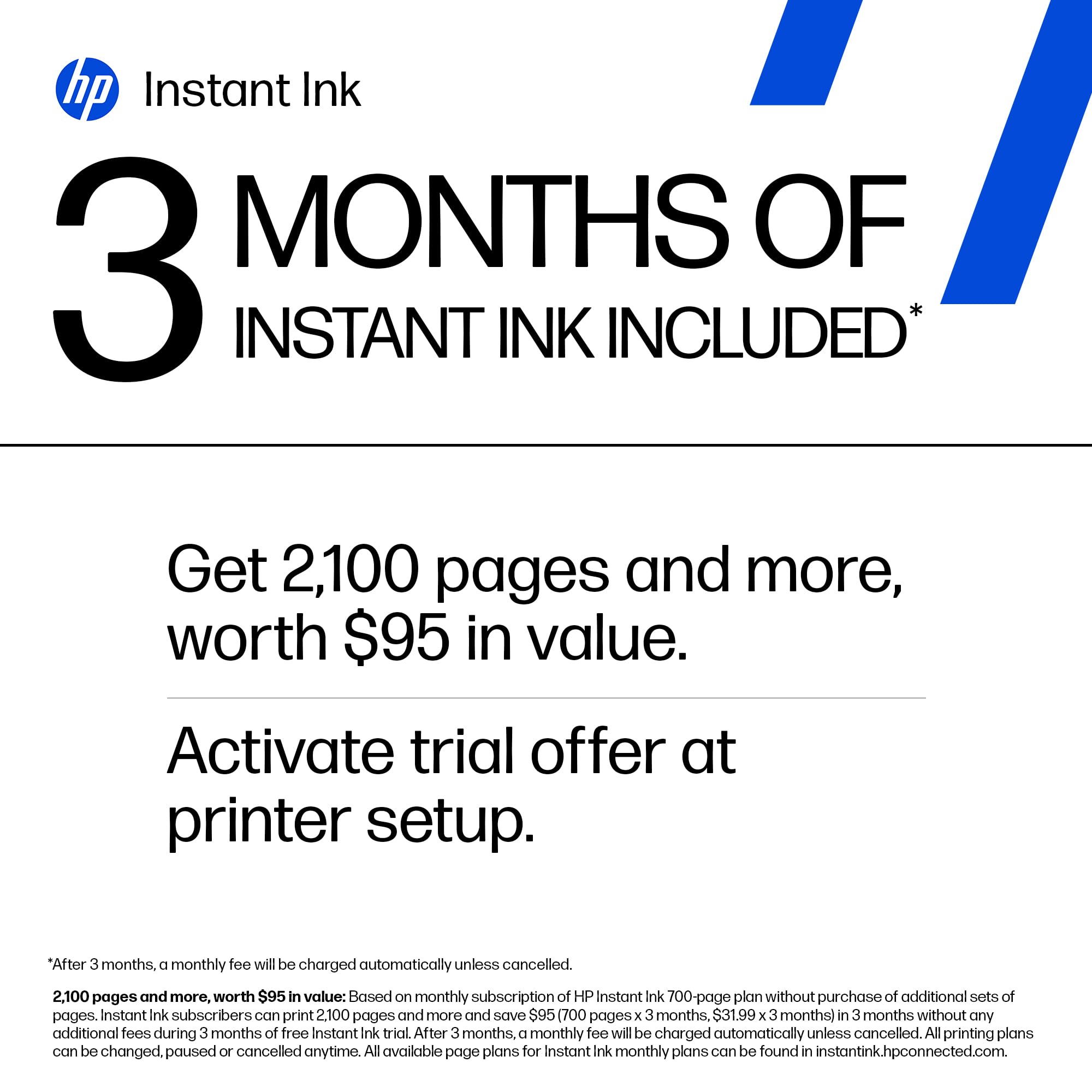
Beyond setup, concerns about HP's ink management system are pervasive. We noted complaints of ink cartridges leaking upon installation and recurring 'account error or cartridge' messages, even when using the supplied ink. The cartridges themselves are described as small and expensive, leading to frequent replacements. A particularly worrying aspect for many is the potential for the printer to be remotely disabled if subscription terms aren't met, a sentiment that has led some users to express feeling 'extorted.' This ecosystem lock-in is a significant consideration, especially when compared to other office organisation tools. For instance, while devices like the NIIMBOT B1 or SUPVAN T50M Pro label makers offer dedicated functionality with generally simpler setup, printers like this HP model can introduce layers of complexity and potential ongoing costs that aren't immediately apparent. Performance is another area where experiences diverge sharply. While some users found the print speed surprisingly fast for its price range and praised the duplex printing as a time-saver, others reported painfully slow print jobs, particularly for documents with images, sometimes taking nearly a minute per page. Scanning quality also drew criticism, with some users describing the output from the ADF as poor and grainy. Reliability is also a concern, with several accounts of printers simply stopping printing after just two or three months, or experiencing unexpected shutdowns, leading to difficult and lengthy attempts at support resolution. This lack of consistent performance and long-term reliability directly impacts the printer's viability as a sound investment. Our analysis of the 15,230 reviews indicates a mixed reception. While approximately 75% of buyers rated this printer 4 or 5 stars, suggesting a segment finds it a reliable and valuable tool, a significant ~15% of users gave it 1 or 2 stars. This substantial portion of negative feedback cannot be ignored. It suggests that while the HP OfficeJet Pro 8125e *can* be a cost-effective solution for those who get a functional unit and are comfortable with HP's subscription model, the risk of encountering setup nightmares, ink issues, or premature hardware failure is considerable. For buyers prioritizing a hassle-free experience or wary of subscription models, exploring alternatives, such as those from Brother, which some users have switched to, might be a more prudent choice. The perceived value is high when it works, but the documented struggles for a significant minority mean this is a purchase that warrants careful consideration.