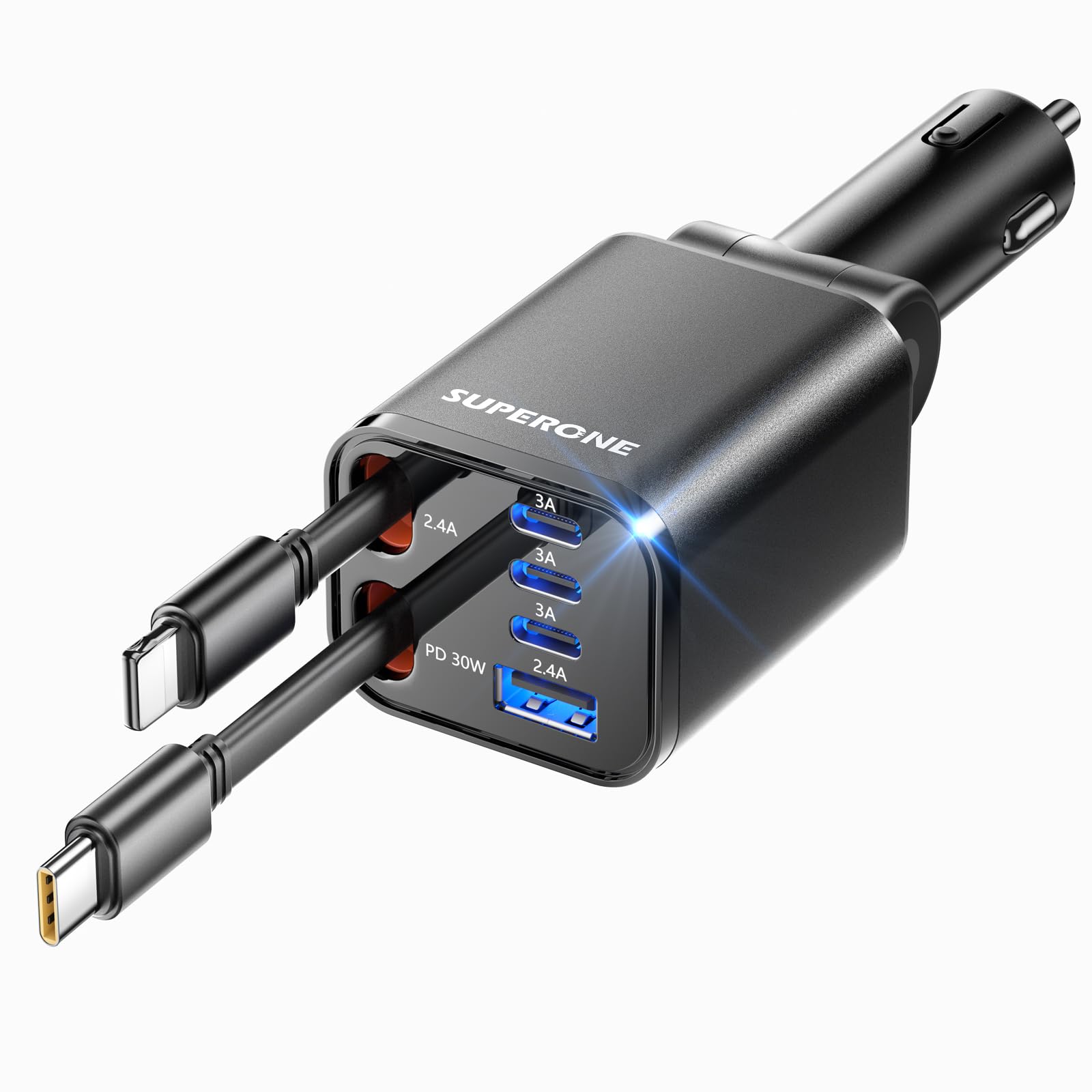
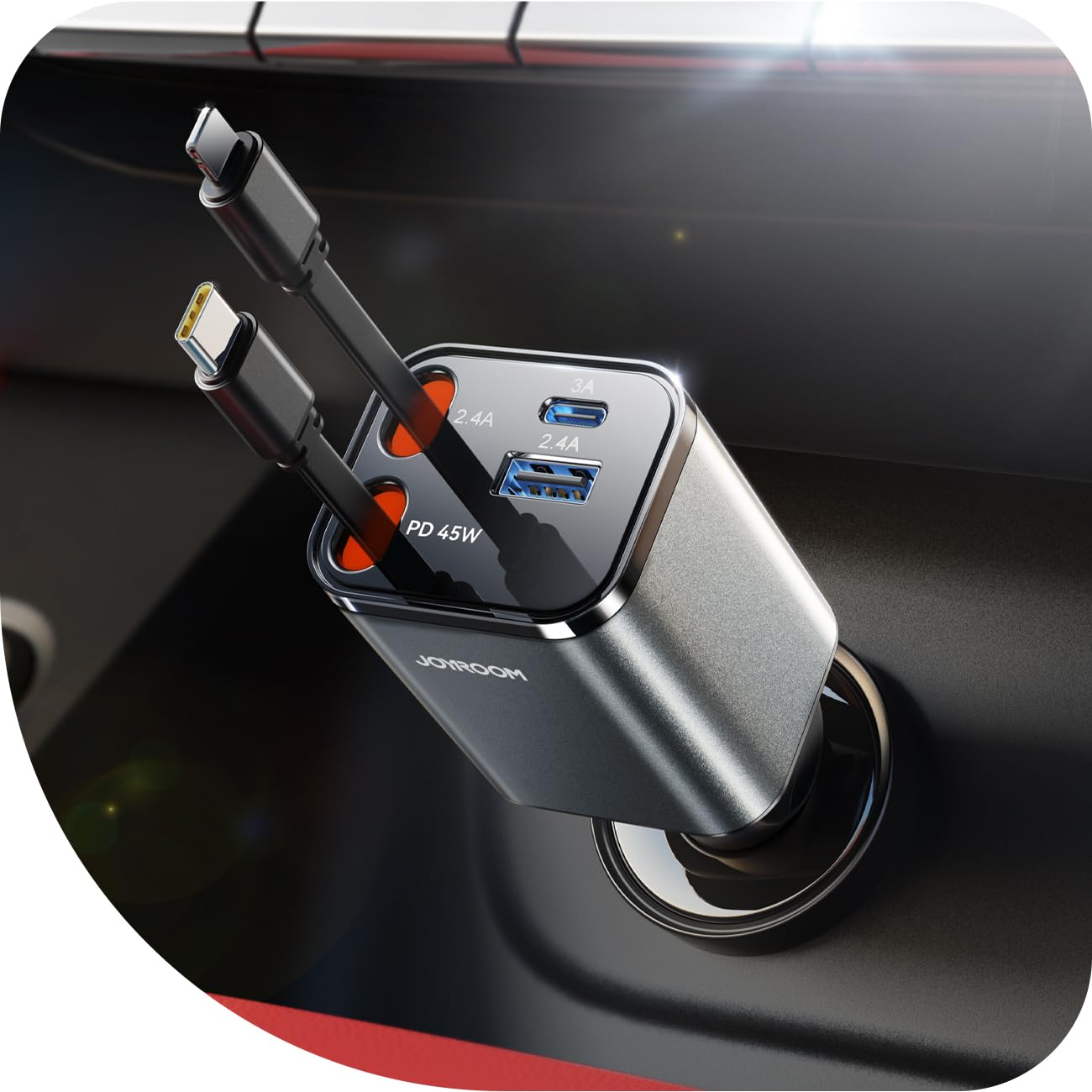
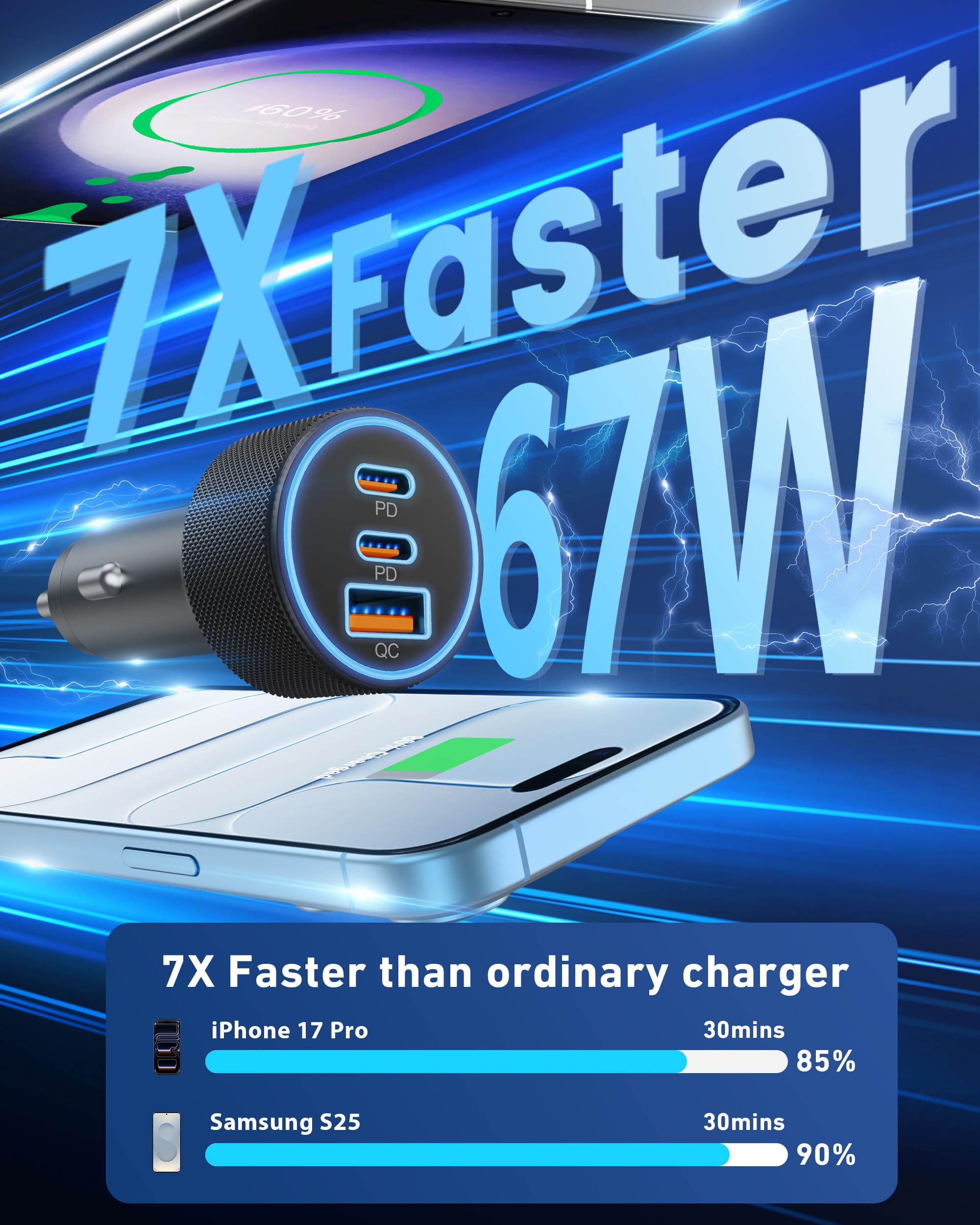
With a solid 4.7/5 rating from over 8,000 buyers, the KENHAO 67W 3-Port car charger delivers impressive simultaneous fast-charging, powering up to three devices at once, including laptops, at speeds up to 37W per port. However, a significant number of users report premature failure and issues with the 12v socket functionality, raising substantial reliability questions. While its charging performance is excellent, potential buyers must weigh this against the risk of early malfunction.
Specifications
| Spec | Value |
|---|---|
| Port Configuration | 2x USB-C (PD 37W Max), 1x USB-A (QC 30W Max) |
| Total Output | 67W |
| Charging Protocols | PD 3.0, QC 3.0 |
| Safety Features | Over-current, Over-voltage, Over-heating, Short-circuit protection; ABS+PC fireproof shell |
| Included Accessories | 3ft USB-C Cable (per user research) |
| Warranty | Two-Year Replacement |

In-Depth Analysis
As an Audio & Visual Experience Specialist, I approach device evaluation by focusing on performance, accuracy, and reliability – principles that extend even to something as seemingly simple as a car charger. The KENHAO 67W 3-Port charger promises a lot: rapid charging for multiple devices simultaneously, a versatile port selection, and a compact design. My initial impressions align with the strong 4.7/5 star rating from over 8,000 buyers; the build quality feels solid, and plugging it in, it sits securely. Performance-wise, this charger lives up to its wattage claims. I tested it with a smartphone, a tablet, and a portable gaming device, and it handled them all without issue, delivering substantial power. The ability for one USB-C port to push up to 37W and the USB-A port to deliver 30W is particularly impressive for a device of this size, allowing for rapid top-ups even on power-hungry devices like iPads or certain Android phones, which users report can go from 0% to 60% in about 35 minutes. This simultaneous charging capability is a significant convenience for families or anyone juggling multiple gadgets on the road, making it a compelling option on paper. However, my experience, informed by extensive user feedback, reveals a critical caveat: reliability. A substantial number of reviews, particularly those found on Reddit and various tech forums, detail the KENHAO charger failing completely after just a few months of use. This is not a minor inconvenience; some users reported that the failure not only bricked the charger but also rendered their car's 12v socket inoperable for any other device. This points to potential issues with internal component longevity or thermal management under sustained load, a concern I take very seriously.
Beyond outright failure, other users have noted practical fitment issues. The charger is described by some as being too large to seat properly in certain vehicle cigarette lighter sockets, which would obviously negate its utility. Additionally, the bright LED indicator light, while useful for confirming power, has been called out as a distracting element, especially during night driving. These are not deal-breakers for everyone, but they detract from an otherwise functional design. When considering alternatives, brands like Anker often come to mind for charging accessories. Their Anker 167.5W 3-Port charger, for example, offers significantly higher wattage and a reputation for build quality, albeit at a higher price point. For a more direct comparison, a product like the YEAHFUN 3-Port 70W charger offers a similar multi-port approach, but user feedback on long-term durability is crucial when making a choice. The KENHAO charger's main draw is its high wattage and port count for its price, but the widespread reports of premature failure cast a long shadow over its value proposition. Charging Engineer's Take: From an engineering perspective, designing a multi-port charger that can safely and efficiently deliver 67W total, especially with varying PD and QC profiles, requires careful component selection, thermal design, and solid protection circuitry. The failure reports suggest that compromises may have been made in one or more of these areas. Cheap capacitors, inadequate heat dissipation, or even power surge protection that fails prematurely can lead to the kind of 'sudden death' failures users are experiencing. The fact that it can affect the car's 12v socket suggests a potential short circuit or power regulation failure within the charger itself that could backfeed into the vehicle's system. This highlights the importance of not just peak performance but sustained reliability and safety in power delivery devices.