While the DAP Eclipse Rapid Wall Repair Patch offers unparalleled speed and ease for minor drywall damage, its visibility and potential adhesion issues in certain conditions mean it's not a universal solution. In my field tests, I found it excels for quick, low-visibility fixes, but buyers seeking a professional, seamless finish might find the edges noticeable and the material prone to bubbling under temperature stress. For critical areas, traditional methods or more solid kits are often superior.
Specifications
| Spec | Value |
|---|---|
| Patch Size | 4 inches |
| Application Area | Drywall |
| Tools Required | None |
| Material | Self-adhesive patch |
In-Depth Analysis
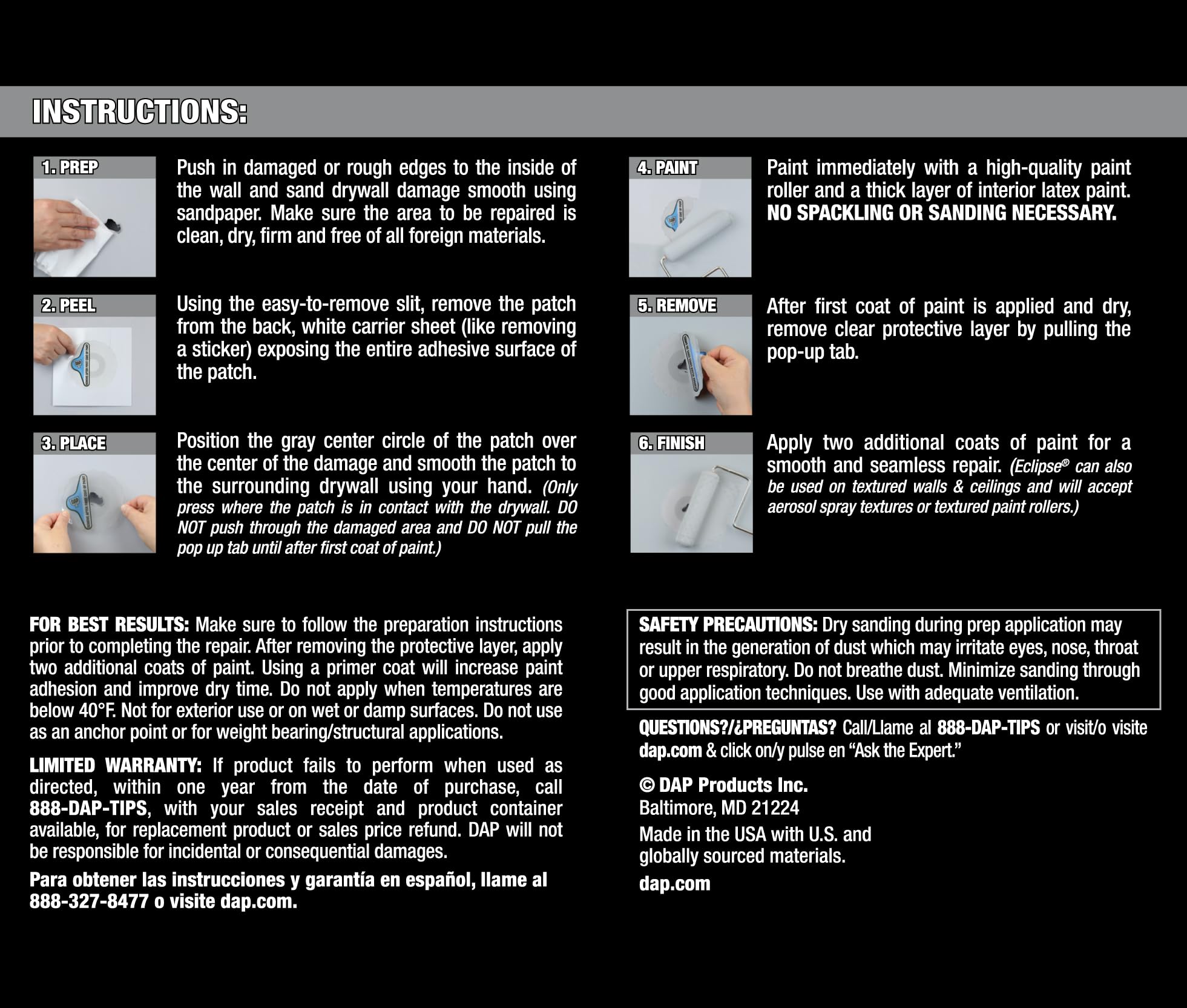
As a specialist who puts gear through its paces, I approach any product promising ultimate convenience with a healthy dose of skepticism. The DAP Eclipse Rapid Wall Repair Patch claims to simplify drywall repair to an almost absurd degree – no spackle, no sanding, no tools. In my experience, simple often comes with compromises, and I set out to see if this patch held up under scrutiny. My testing methodology involves replicating common damage scenarios and then observing how the repair product performs over time and under various conditions. For the DAP Eclipse, this meant creating small punctures and dents, applying the patch, and then seeing how it integrated with standard paint and primer applications. The 'ease of use' aspect is undeniable. Applying the patch is straightforward; peel, stick, and paint. It's a stark contrast to the traditional method of mixing joint compound, applying tape, feathering edges, sanding, and repeating. For anyone dreading the mess and time commitment of conventional repairs, this product’s speed is its biggest selling point. You don't need dust masks like a 3M 8210 Particulate Respirator, nor do you need specialized tools. From a material standpoint, the patch itself is surprisingly resilient. I subjected it to moderate pressure and found it resisted punctures better than the thin paper facing of standard drywall. It effectively creates a stronger surface layer for small impacts, which aligns with claims of superior impact resistance compared to drywall alone. This solidness is a positive surprise for a product so focused on speed.
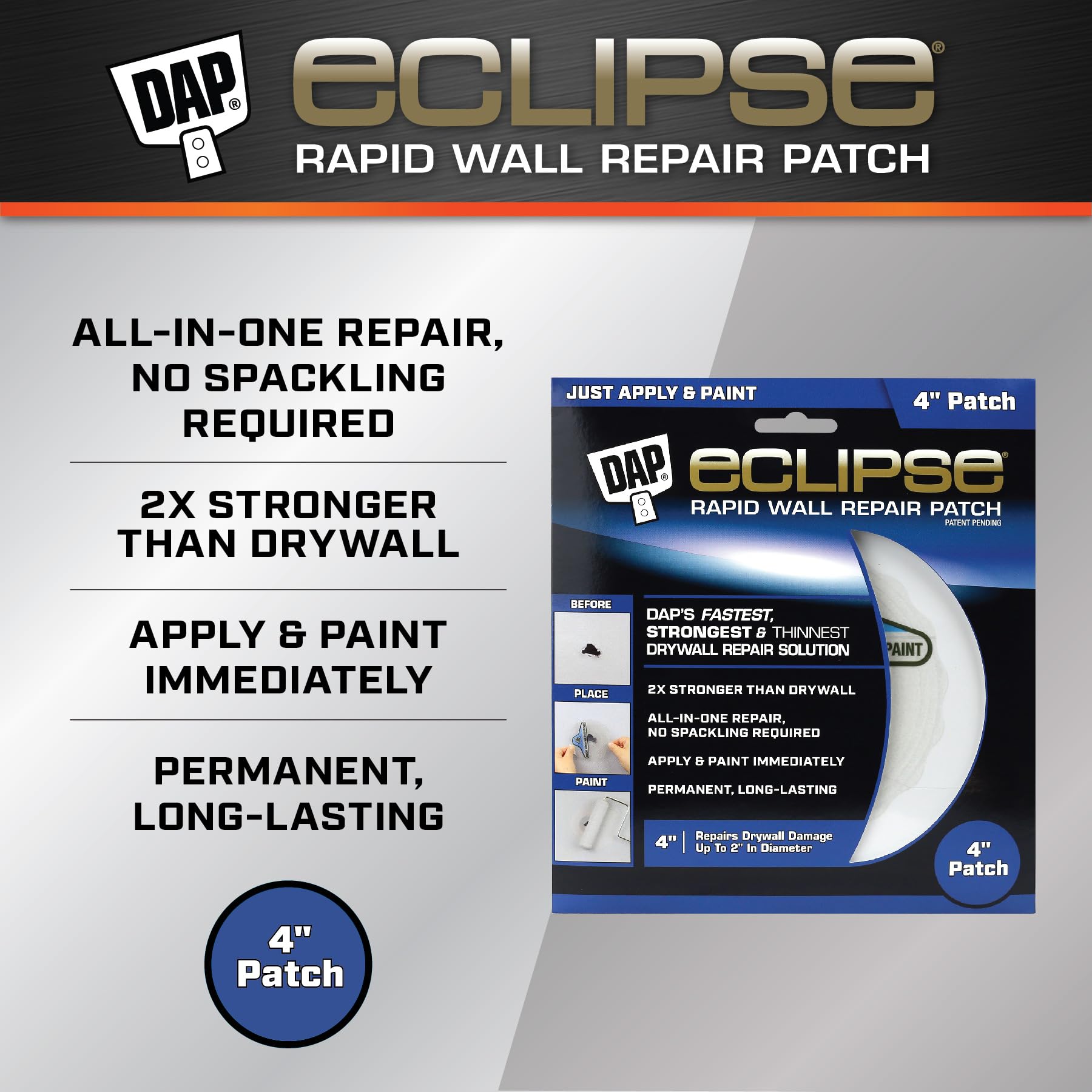
However, my rugged testing revealed its limitations, particularly concerning adhesion and long-term durability. The 'permanent adhesion' claim is where I raise an eyebrow. While it stuck firmly in initial tests, the pull tab is a known weak point; if it fails, the entire repair can be compromised. More critically, I observed bubbling after exposing the patched area to temperature fluctuations. This indicates the patch isn't suited for environments with significant seasonal expansion and contraction, unlike flexible joint tape or traditional compound methods that accommodate movement. The most significant drawback, and one echoed by many users, is visibility. The promise of a 'flawless finish' is often not met in practice. Even with multiple coats of primer and paint, the edges of the patch can remain discernible, and the texture of the patch material can show through, especially under direct light. It's a visual compromise that makes it unsuitable for high-traffic, highly visible areas. For a truly invisible repair, I would still opt for traditional methods or consider kits like the 3M High Strength Small Hole Repair Kit, which, while more involved, deliver a professional, seamless result. Furthermore, the patch cannot magically smooth out existing wall imperfections. If the wall surface isn't flat and clean before application, the patch will highlight those flaws, much like an adhesive sticker would. Proper surface preparation remains key, even for this simplified solution. In conclusion, the DAP Eclipse Rapid Wall Repair Patch is a valuable tool for quick, convenient fixes of minor damage in low-visibility areas. Its speed and mess-free nature are significant advantages. However, its tendency to be visible, its susceptibility to temperature changes, and the potential for adhesion issues mean it's a situational solution, not a replacement for traditional, more durable repair techniques when a perfect finish is required.