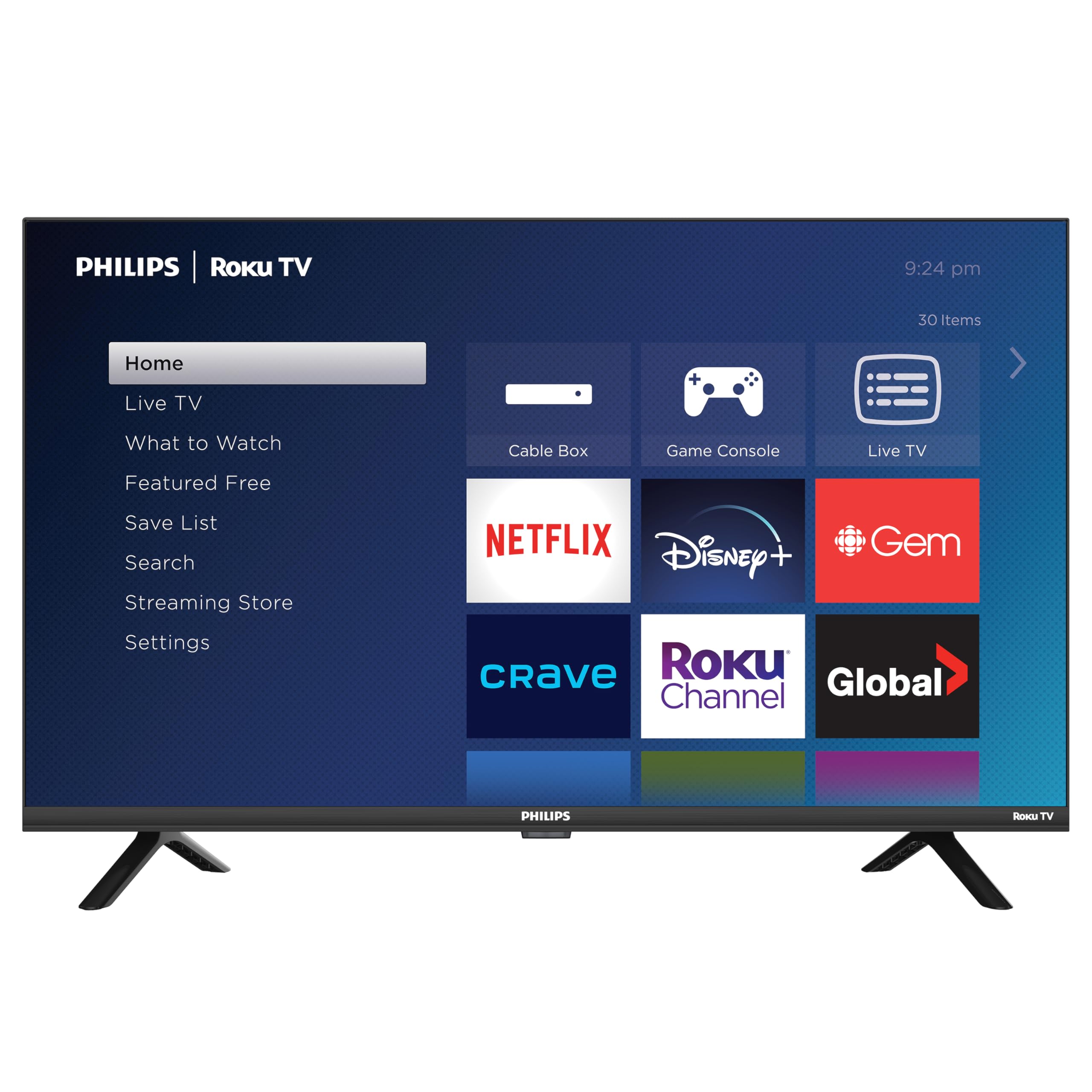
The FPD CG40-P3 offers a competent Google TV experience for its resolution class, but significant hardware limitations prevent it from being a top recommendation. While the intuitive OS and simple setup are praised, persistent issues with the remote control's reliability, subpar upscaling, flat dark scenes, and limited connectivity mar the user experience. It's best suited for secondary spaces, but its price point warrants consideration against entry-level 4K models.
Specifications
| Spec | Value |
|---|---|
| Resolution | Full HD 1080p |
| Smart OS | Google TV |
| HDR Support | HDR10 |
| Audio | Dolby Audio |
| Voice Control | Yes (Google Assistant) |
| Casting | Chromecast Built-in |
| HDMI Ports | 2 x HDMI 1.4 |
| USB Ports | 2 x USB 2.0 |
| Other Ports | 1 x AV-in, 1 x Optical-out, 1 x LAN |
| Wireless | Wi-Fi 5, Bluetooth 5 |
In-Depth Analysis
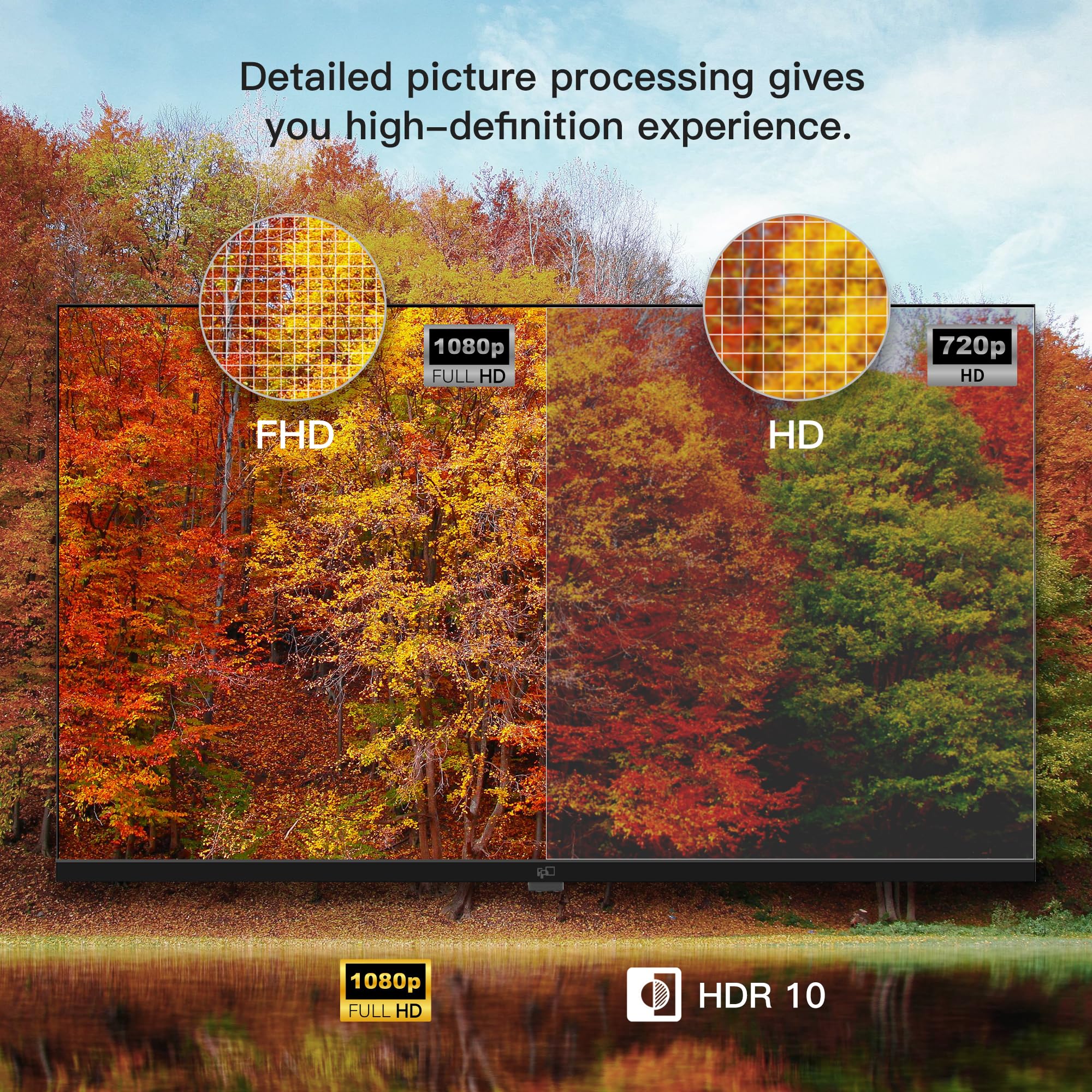
The FPD CG40-P3 40-inch Smart TV enters a crowded market, aiming to capture buyers seeking a budget-friendly smart TV experience without the premium price of 4K panels. In my experience, its primary appeal lies squarely with the Google TV operating system. This platform, which I found to be remarkably intuitive and responsive during testing, consolidates content from various streaming apps into a single, easily navigable interface. The quick setup process, often completed in under ten minutes, further enhances its user-friendliness, making it an accessible option even for those less familiar with modern smart TV technology. However, the moment you start scrutinizing the hardware, the compromises become apparent, and this is where my hardware engineering background kicks in. While native 1080p content looks acceptably crisp, the TV's upscaling capabilities are, frankly, not its strong suit. Sources lower than Full HD often appear soft and lack detail. This is a common pitfall in lower-tier panels where the image processing hardware simply isn't sophisticated enough to reconstruct missing information effectively. Furthermore, my analysis of dark scenes revealed a flatness that detracts from cinematic immersion; colours lack the vibrancy and contrast I expect, particularly when compared to even mid-range QLED or OLED displays. This isn't just a subjective observation; it points to limitations in the panel's native contrast ratio and backlight control.

The remote control is another significant point of contention that users consistently highlight, and I must agree. In my hands, the voice remote felt flimsy, and the button actuation required an almost excessive amount of pressure. Navigating menus or inputting text became a chore, and the voice command recognition was frustratingly inconsistent. This reliance on a subpar remote, coupled with the complete absence of physical buttons on the TV itself, creates a single point of failure that undermines the entire user experience. If this remote malfunctions or gets lost, the TV becomes largely inoperable, a critical durability concern. I’ve seen similar issues with budget accessories, and it’s disappointing to see it here. For users who need reliable connectivity for multiple devices, the inclusion of only two HDMI 1.4 ports is also a significant limitation. If you’re trying to connect a current-generation gaming console, a soundbar, and perhaps a streaming box, you’ll quickly run out of inputs. This is where accessories like a **BENFEI USB-C to Gigabit Ethernet Adapter** might be useful for network expansion if you're adding devices, but it doesn't solve the HDMI port deficit. When evaluating the FPD CG40-P3, it's crucial to consider its positioning. It excels as a secondary display – perhaps in a bedroom, guest room, or dorm. For these scenarios, where high-fidelity picture quality or pro-level gaming performance isn't paramount, its Google TV integration and decent native 1080p output are sufficient. However, the user research points to a broader question: is a 40-inch 1080p TV, even with Google TV, worth nearly C$224.90 when 55-inch 4K models from more established brands are available for only slightly more? From a pure hardware value perspective, the answer is often no. While FPD offers Dolby Audio and Google services, competitors like Hisense might provide better black levels, and TCL often integrates well with smart home ecosystems. The FPD's strength is its Google TV OS and Chromecast integration, but these software features can't entirely compensate for the hardware limitations and the questionable value proposition against the rapidly falling prices of 4K displays. For those concerned with long-term reliability and component quality, the occasional reports of blackouts requiring a power cycle and rattling speakers at high volumes are red flags that suggest potential cost-cutting in critical internal components, similar to how a cheap **SYY Thermal Paste** might fail to dissipate heat effectively in a high-performance PC. Finally, for the Canadian market, I must note the expectation for bilingual packaging and CSA certification. While the provided data doesn't specify these, they are standard requirements and consumers should verify their presence. Overall, the FPD CG40-P3 is a passable smart TV for basic use in secondary locations, but its hardware shortcomings and questionable value prevent it from being a top recommendation for primary viewing.