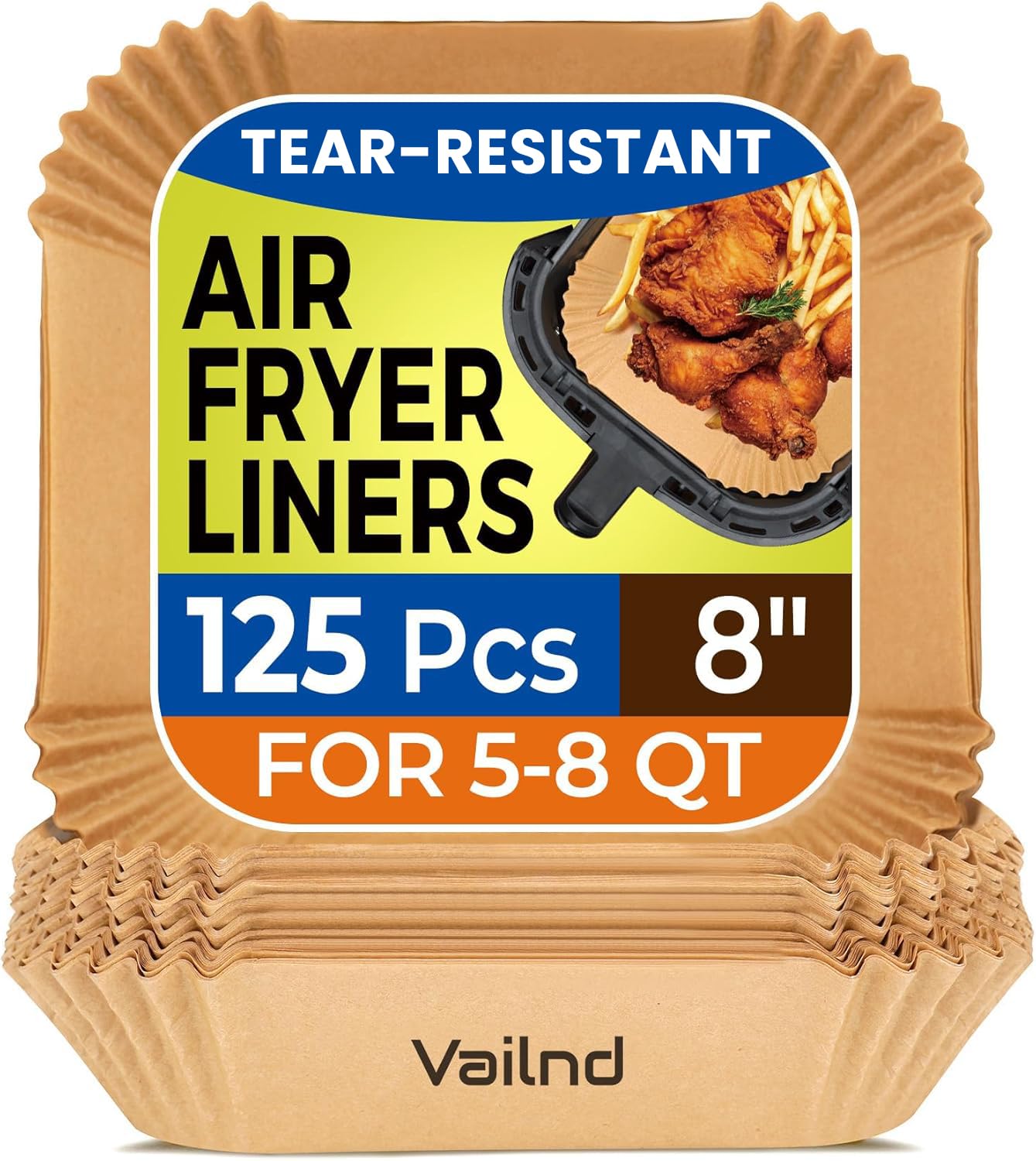
Despite convenience, these vailnd liners pose a potential safety risk. While 72% of buyers rate them 5 stars for ease of use, the lightweight parchment can fly into heating elements if not properly weighted. They excel at catching grease, but imperfect crisping and thinness are noted drawbacks. Consider this for quick cleanup, but be mindful of operational safety.
Specifications
| Spec | Value |
|---|---|
| Bottom Width | 8 inches |
| Height | 1.8 inches |
| Top Width | 7.9 inches |
| Count | 125 Pieces |
| Max Temperature | 428°F |
In-Depth Analysis
My kitchen is a proving ground, and the vailnd Air Fryer Paper Liners recently faced the heat. My goal was simple: see if these disposable liners live up to their promise of effortless cleanup, or if they introduce more problems than they solve. I tested them with a batch of classic French fries and some spicy chicken wings, two common air fryer staples that tend to leave a greasy aftermath. The initial impression was positive. Unboxing revealed 125 liners, neatly stacked and ready to go. The key feature is their pre-formed shape, designed to fit 5-8 quart Ninja air fryers (like the AF150 I have on hand) without any cutting or folding. This is a genuine time-saver; I simply placed one into the air fryer basket, added my seasoned fries, and hit start. The liner sat flat, catching errant oil splatters and stray potato bits as expected. Following food safety guidelines and manufacturer cleaning instructions is always paramount, and these liners are designed to make that second part almost redundant. However, my experience quickly highlighted a significant concern noted in user feedback: the weight, or lack thereof. With a half-full basket of fries, the liner stayed put. But when I switched to chicken wings, which are lighter and often cooked in smaller batches, the liner began to lift. One wing shifted, and the corner of the paper liner started to curl upwards, inching perilously close to the heating element. This is not a hypothetical risk; it's a real kitchen hazard that could lead to smoke or even a fire. This observation aligns with multiple Reddit threads where users describe liners flying up, especially with lighter foods or when the basket isn't packed. It's a crucial point – these liners require careful consideration of food quantity and placement to remain safe.

Beyond the safety aspect, I also evaluated their impact on cooking performance. While the liners did an admirable job of containing grease, I noticed a slight decrease in the crispiness of my fries compared to when I cook them directly in the basket. The paper absorbs some moisture, which is great for cleanup but can hinder that desirable crunchy texture. This is a trade-off many users have pointed out. If achieving the absolute crispiest results is your top priority, you might find these liners a compromise. For everyday use where convenience trumps peak crispiness, they might still be a good option. Handling the thin paper also proved trickier than anticipated. When transferring cooked food out, I found the liner could sometimes tear or sag, especially if there was a lot of accumulated grease or sauce. This means that while the air fryer basket itself remains clean, you might end up with a messy liner to discard, sometimes requiring a careful transfer to the bin using a spatula, perhaps like one from a ChefAide set, to avoid spills. This contrasts with reusable silicone liners, which offer durability but demand a more involved cleaning process themselves. These disposable liners certainly win on the quick-cleanup front, but their thinness means they aren't always solid enough for substantial, juicy foods. Ultimately, the vailnd liners offer a compelling convenience. They make cleaning an air fryer, a task that can sometimes feel as daunting as scrubbing a food chopper like the Mueller Pro Chopper after dicing onions, incredibly simple. You just toss the liner. But this convenience comes with caveats. The lightweight nature demands vigilance, and the impact on crispiness is a factor for serious home cooks. For those prioritizing speed and minimal mess over achieving restaurant-level crisp, and who are mindful of the weight issue, these liners are a viable accessory. For others, the potential for a fire hazard or slightly less-than-perfect crisp might steer them toward other solutions. **Chef's Warning**: Always ensure sufficient food weight is on the liner to prevent it from lifting into the heating element. If cooking lighter items, consider using a liner with a heavier reusable basket or securing the liner edges if possible.