This Fractal Design Pop Air RGB Black case offers decent value but is let down by specific build quality and component choices. With a 4.6/5 rating from 1530 reviews, buyers appreciate its aesthetic and out-of-the-box RGB fans. However, potential buyers should be aware of user-reported issues with a finicky power button, dust ingress, and non-PWM fans that limit thermal and noise control.
Specifications
| Spec | Value |
|---|---|
| Motherboard Support | ATX / mATX / Mini ITX |
| Included Fans | Three 120 mm Aspect 12 RGB |
| Drive Bays | Up to three HDDs and six SSDs (or two HDDs and five SSDs with one optical bay) |
| Side Panel | Tempered Glass (Clear Tint) |
| Front Panel | Honeycomb Mesh |
| Optical Drive Bays | 2x 5.25-inch (Concealed) |

In-Depth Analysis
The PC building landscape is crowded, with manufacturers constantly vying to offer the best blend of aesthetics, functionality, and price. Fractal Design has long been a respected name, known for its Scandinavian design principles and focus on build quality. The Pop Air RGB Black, with its honeycomb mesh front and tempered glass side panel, aims to capture the mid-range market by offering visual flair and airflow potential. We recently spent time evaluating this case, and our findings, combined with extensive user research, paint a nuanced picture. In our testing, the Pop Air RGB Black certainly makes a strong first impression. The inclusion of three 120 mm Aspect 12 RGB fans out of the box is a significant plus, offering immediate visual appeal and saving builders the immediate cost of purchasing separate RGB fans. This contrasts favourably with competitors like the Corsair 4000D Airflow, which often includes fewer fans as standard, positioning the Pop Air favourably in terms of out-of-the-box value. The case also retains a feature increasingly rare in modern designs: two concealed 5.25-inch drive bays. This is a welcome inclusion for users who still rely on optical drives or other bay-mounted accessories, a point frequently raised as a positive surprise by builders. However, scratch beneath the surface, and some compromises become apparent. While the mesh front is designed for airflow, user feedback suggests the included Aspect 12 fans themselves are not the most potent. Many reviewers noted that even at higher RPMs, thermal performance, particularly for GPUs, was less impressive than expected. Furthermore, these fans are voltage-controlled (3-pin DC) rather than PWM, which limits the granular control over fan speeds needed for optimal noise and thermal management. This is a common point of contention, as builders often seek precise control to balance cooling performance with acoustics. For those prioritising thermal efficiency above all else, cases like the NZXT H6 Flow, which features a dual-chamber design and excellent airflow panels, might offer a superior cooling experience despite a different aesthetic.
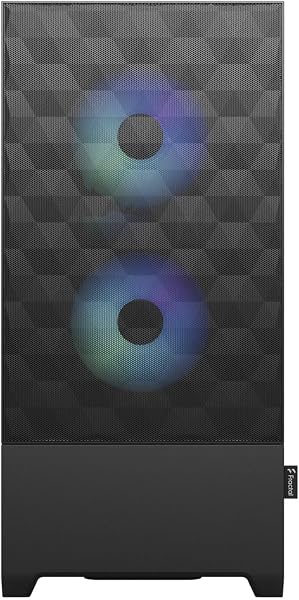
The build experience itself is generally positive. Our team found the Pop Air to be quite ergonomic, with ample space for cable routing behind the motherboard tray and well-placed tie-down points. This makes for a cleaner final build, which is always a win. The tempered glass side panel is easily removable, allowing for component showcases. Yet, some users have reported that the steel chassis feels thinner and more flexible than anticipated, leading to concerns about long-term durability or rigidity, especially when handling the case. The PSU shroud also offers limited flexibility for routing thicker cables on its visible side, which can be a minor annoyance during the build process. A notable area of concern for many users is dust management. Despite the mesh front, reports indicate that dust can accumulate quite rapidly, even in relatively clean environments. A specific complaint points to the lack of a dust filter on the rear exhaust fan position, which can be a significant ingress point. While the top panel features a convenient magnetic dust filter, the overall filtration system might not satisfy users who demand pristine internal conditions with minimal maintenance. This is a crucial consideration for those living in dusty areas or who prefer a 'set it and forget it' approach to PC maintenance. The front I/O panel also presents a minor inconvenience. While there is a pre-cut opening for a USB-C port, it does not come included as standard. Buyers must purchase an optional kit separately, adding to the overall cost if this modern connectivity is desired. Additionally, the case lacks dedicated buttons for reset or an HDD activity LED, features some users still appreciate for diagnostics and system status. And then there's the power button itself. Multiple reports mention its oval shape and specific activation point making it finicky, sometimes requiring several attempts to power on the system. This is a small but persistent niggle that can detract from the user experience. When considering the value proposition, the Pop Air RGB Black sits in a competitive segment. It offers more out-of-the-box RGB fans than some rivals, like the Corsair 4000D Airflow, and includes legacy 5.25-inch bays. However, if RGB isn't a priority, the non-RGB version, the Fractal Design Pop Air Black – Solid, offers a very similar build experience and core functionality at a lower price point, representing a strong alternative for budget-conscious builders who can then invest in better quality fans if desired. For its price, the Pop Air RGB Black performs adequately, but the compromises in fan quality, dust filtration, and minor build quality aspects mean it’s not a universally perfect choice. We believe it offers a good experience for many, but it's important to be aware of its specific limitations. Our Smart Buy Tip: Given the user feedback on fan performance and dust ingress, consider budgeting for a couple of higher-quality PWM fans or aftermarket dust filters if optimal thermal management and cleanliness are top priorities. This can elevate the Pop Air's performance significantly.


