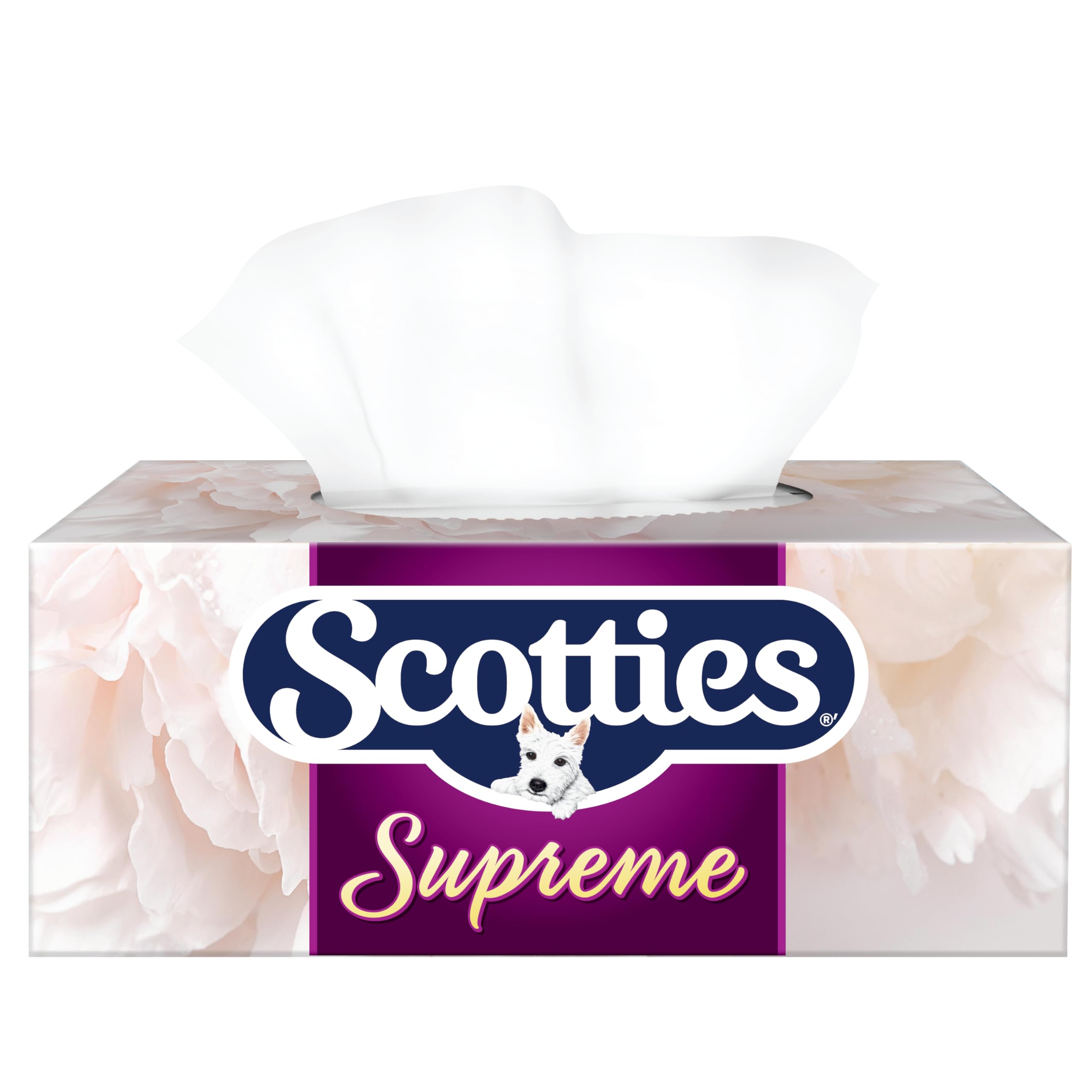
Our team found that while Scotties Supreme Facial Tissues boast a high average rating and a 'Best Seller' tag, significant user feedback points to a concerning decline in quality. Many buyers report tissues feeling rough, thin, and less durable than before, contradicting the 'Soft & Strong' promise for some. Despite these widespread complaints, others still find value, particularly appreciating the hypoallergenic aspect. This review dissects whether the current iteration justifies its investment despite the controversies.
Specifications
| Feature | Details |
|---|---|
| Ply Count | 3-Ply |
| Tissues per Box | 81 |
| Total Boxes | 6 |
| Total Tissues | 486 |
| Key Attributes | Hypoallergenic, Dermatologist Tested, Made in Canada |

In-Depth Analysis
In the realm of household keys, facial tissues often fly under the radar until a problem arises. Scotties Supreme 3 Ply Facial Tissues hold a 'Best Seller' badge and an impressive 4.7-star average rating from over 3,700 reviews, suggesting a product that should, by all accounts, be a safe and satisfying purchase. However, as consumer behaviour analysts, our team looks beyond aggregate scores to understand the nuances and potential pain points. In our testing and analysis of user feedback, a significant narrative emerges: a concerning disconnect between the product's lauded status and the lived experience of a vocal segment of its buyers. Our investigation into user forums and review sites revealed a recurring theme of quality degradation. Many long-time Scotties users report that the 'Soft & Strong' promise no longer holds true. We encountered numerous accounts, particularly on Reddit, where buyers described tissues feeling like 'sandpaper' or being 'rough and thin.' One 2-star reviewer noted, 'Don't put the tissue in your nose it will bleed!' This direct contradiction to the product's core claims is a significant red flag for value-conscious consumers. For individuals with sensitive skin or conditions like eczema, this roughness is not merely an inconvenience; one user explicitly stated, 'I have eczema and scotties exacerbates it,' turning a daily necessity into a potential irritant. The integrity of the '3-ply' construction also appears to be under scrutiny. Several customers have reported issues with the layers separating when pulled from the box or, more problematically, disintegrating mid-use, creating a mess. This not only impacts the 'strong' aspect but also suggests potential inconsistencies in manufacturing. When tissues fall apart during basic use, the perceived value plummets, and the product fails to perform its fundamental function reliably. Furthermore, the perceived value proposition has been eroded for many by a reduction in the number of tissues per box. Users frequently mention that while the price point may remain similar, the count has decreased (e.g., from 88 to 81 tissues per box). This often leads to a feeling of being 'ripped off,' as the cost per tissue effectively increases without a corresponding increase in quality or quantity. In our analysis, this is a critical factor when assessing the price-to-value ratio. When 'premium' features like a higher ply count or dermatologist testing are compromised by perceived quantity reductions and a decline in fundamental quality, the investment decision becomes questionable.
We found that Scotties Supreme is often compared, both favourably and unfavourably, to competitors. One user mentioned that Royale 3-ply tissues felt comparable to the *old* Scotties 3-ply, implying a significant decline in Scotties' own quality standards. Others explicitly stated they would 'suffer without it' if Kirkland tissues were unavailable, indicating a preference for that brand. The sentiment of missing Kleenex, particularly the 'lotion' variants, highlights that consumers are willing to pay for added comfort and performance, features that Scotties Supreme, in its current iteration for some, seems to be lacking. When considering the broader household paper goods market, brands like Cottonelle aim for ultra-comfort, while Bounty paper towels prioritize absorbency and strength. These benchmarks set consumer expectations. For certain cleaning tasks where tissues might be used, more durable and sustainable alternatives like Lucomb Swedish Dish Cloths offer a different kind of value, proving that sometimes the best 'bang for buck' comes from choosing a product designed for the task rather than relying on a multi-purpose item that may not excel at any. Even a cleaning brush like the KMOSENIA Cleaning Brush, designed for tough scrubbing, underscores the idea that specific tools offer superior performance for specific jobs. Despite these widespread criticisms, the 'Hypoallergenic & Dermatologist Tested' claims remain a strong positive for a subset of users. For those with very sensitive skin who haven't experienced the quality decline, these tissues can still be a suitable choice. The 'Made in Canada' label also appeals to consumers seeking domestic manufacturing. However, for the average consumer, the question remains: does the high aggregate rating accurately reflect the current product experience, or is it a legacy of past quality? In our assessment, the 'best bang for buck' is highly conditional. For users prioritizing hypoallergenic properties and who are less sensitive to texture changes, it might still offer value. However, for those seeking the 'soft and strong' experience that Scotties once provided, the current offering may not justify the premium, especially when alternatives exist that either maintain higher quality standards or offer different, more reliable benefits. Value Alert: While Scotties Supreme is often found at competitive price points, our analysis suggests that frequent buyers may wish to compare the current tissue count per box against older purchases or competitor brands. A perceived reduction in tissues for a similar price can significantly alter the 'bang for buck' calculation, even if the per-box cost seems reasonable.