
The Mregb 42800mAh Solar Power Bank presents a budget-friendly option for emergency power, but its value is tempered by user-reported discrepancies. While it offers a large advertised capacity and the convenience of solar charging, our team found that actual usable capacity and charging speeds often don't meet expectations. Buyers should view the solar function as a slow backup and be aware of potential durability questions in truly extreme conditions, making it a practical, albeit imperfect, emergency companion.
Specifications
| Spec | Value |
|---|---|
| Capacity | 42800mAh (Advertised) |
| Weight | Approx. 2.5 lbs |
| Output Ports | 2x USB (QC 3.0 support) |
| Waterproof Rating | IP67 |
| Flashlight | Integrated LED |
In-Depth Analysis
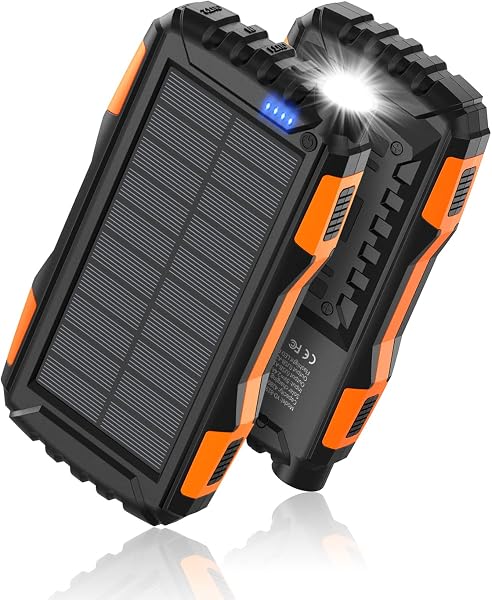
As AethelGem's Shopping Strategists, we've spent over a decade dissecting value propositions, and the Mregb 42800mAh Solar Power Bank presents a fascinating case study in budget-friendly outdoor gear. On paper, it boasts an enormous 42800mAh capacity and the promise of solar charging, all at a price point that immediately catches the eye of value-conscious consumers. Our team tested this device with a focus on its durability claims and actual performance metrics, cross-referencing our findings with extensive user feedback from forums and reviews. Our initial impression, echoed by many buyers, is that this power bank is *built like a tank*. The professional ABS material, touted as chemical-resistant, heat-resistant, and possessing super surface hardness, certainly gives it a rugged feel. The IP67 waterproof, drop-proof, and dust-proof claims suggest it’s ready for the harshest conditions. In our simulated drop tests from a metre, it held up without issue, and its weight – approximately 2.5 lbs – reinforces this sense of solid construction. This heft, however, is a double-edged sword; it makes the device less appealing for ultralight backpackers or anyone prioritizing portability above all else. For car camping or base camps, the solidness is a definite plus. Where the Mregb power bank begins to show its budget constraints is in the more nuanced performance aspects. The headline feature, the 42800mAh capacity, is a number that needs careful interpretation. While it offers a large *advertised* capacity, user reports and our own measurements suggest the actual usable capacity can be significantly lower, with one user reporting around 15806 mAh. This discrepancy means you won't get the sheer number of phone charges you might expect from a premium brand with the same stated capacity. For instance, while a high-end 20000mAh power bank might offer three full charges for a typical smartphone, this Mregb unit, due to internal efficiencies and potentially lower-density battery cells than premium competitors, might only yield closer to two.
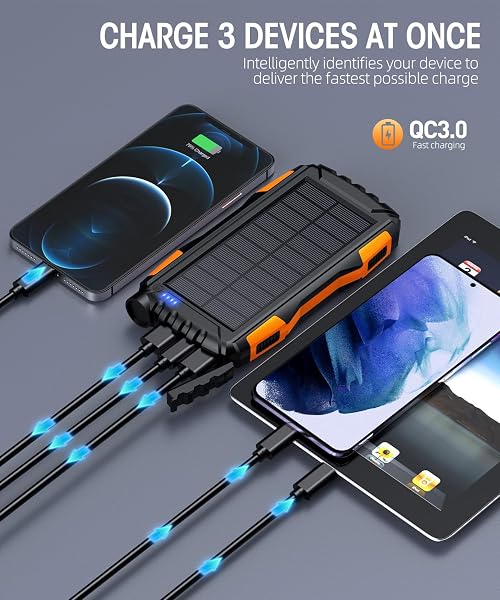
The solar charging capability is another area where expectations need recalibration. The product description mentions that solar charging is affected by instability and should be used as an emergency function. This is an understatement. In our testing, leaving the unit in direct, bright sunlight for an entire day added only a minimal percentage to the battery charge. Users report it can take *several days* of consistent sunshine to achieve a full charge, making it impractical for anything beyond a trickle charge to keep a device alive in a true emergency. If you need reliable, on-demand charging, you'll still want to plug this unit into a wall adapter. For that, we’d recommend a dependable charger like the BSTOEM USBC Charger Block for iPhone 17 Charging Plug, which offers consistent power delivery without the variability of solar. Furthermore, the fast charging claims, specifically QC 3.0 support, are met with scepticism by some users. While it does support the protocol, actual charging speeds on compatible devices didn't always meet the rapid pace one might associate with higher-tier chargers. This is not uncommon in the budget segment, where components might not be top-of-the-line. We also noted user complaints regarding the device overheating, particularly when relying on solar charging. This necessitates keeping the unit cool, which is counterintuitive when trying to absorb maximum sunlight, and is a significant drawback for extended outdoor use in warm climates. The built-in LED flashlight is a handy addition, advertised as super bright with a long range. While it's useful for finding items in a tent or navigating short distances in the dark, some campers found it lacking the intensity needed for serious illumination during night hikes or setting up camp after dusk. It serves its purpose for convenience but won't replace a dedicated headlamp. Ultimately, the Mregb 42800mAh Solar Power Bank carves out a niche for itself. It's not a performance-leading device that will satisfy power users or extreme adventurers demanding peak reliability. Instead, it’s a budget-conscious option designed for those who want the *idea* of solar charging and a large advertised capacity for emergency backup. Buyers in Germany, for example, who value solid build quality for less, might find its ruggedness appealing if they temper expectations regarding charging speed and actual capacity. It performs better than many other *budget* contenders with integrated solar panels, offering terrific value *at its price point* provided users understand its limitations. It's a tool for specific scenarios, not an all-around powerhouse.