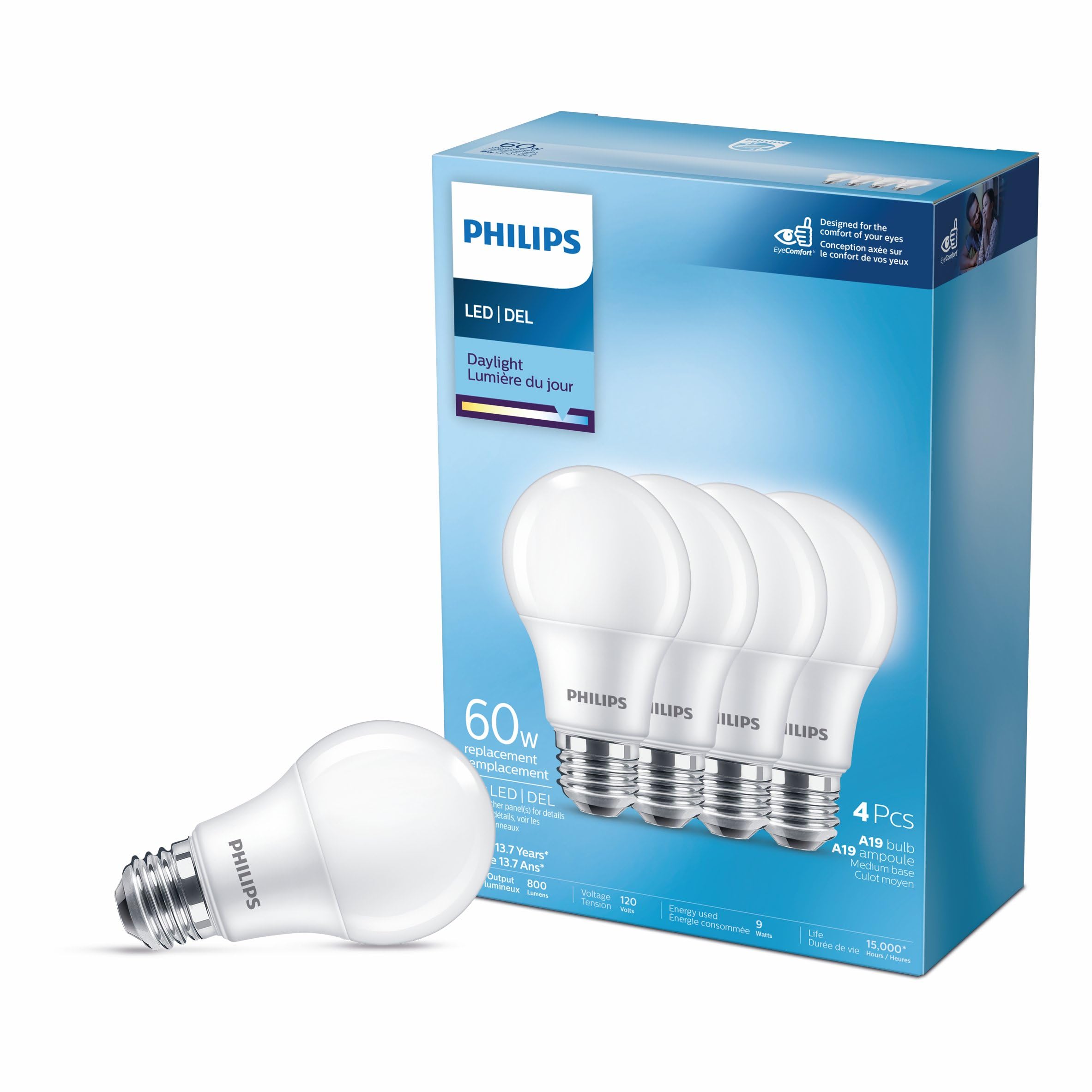
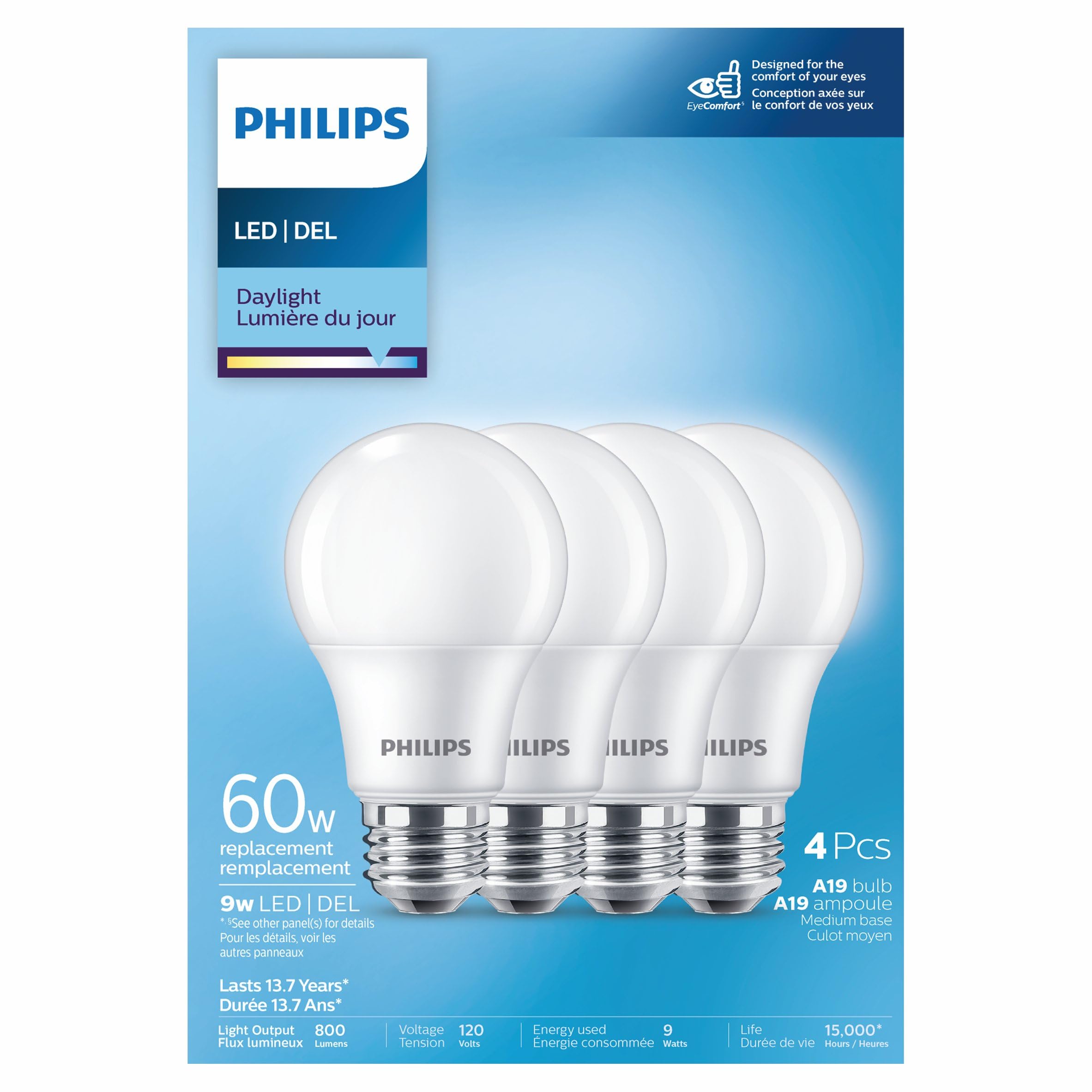
Our team found the Philips 463398 LED bulbs deliver excellent daylight illumination and energy efficiency, aligning with their 'EyeComfort' promise. However, a significant number of user reports highlight premature failures, with bulbs lasting mere months instead of the advertised 11,000 hours, especially in enclosed fixtures. While the Philips brand offers quality, these specific bulbs present a value proposition that requires careful consideration due to these reported durability concerns, making them a 'Cautious Recommendation'.
Specifications
| Spec | Value |
|---|---|
| Bulb Type | A19 LED |
| Wattage Equivalent | 60W |
| Colour Temperature | 5000K (Daylight) |
| Dimmable | Non-Dimmable |
| Advertised Lifespan | Up to 11,000 hours |
| Package Quantity | 4 Count |
In-Depth Analysis
Philips has long been a trusted name in lighting, and the 463398 A19 LED bulbs, with their promise of natural daylight and eye comfort, initially appear to be a solid choice. Our team found the 5000K daylight output to be exceptionally crisp and true, a quality that genuinely enhances visibility and can make tasks requiring fine detail much more manageable. This bright, clear illumination is a significant advantage over warmer, more muted light temperatures, making them suitable for workspaces, kitchens, or any area where clarity is paramount. Furthermore, the energy efficiency touted by Philips is a compelling factor. The potential to save up to 80% on energy usage is not just an environmental benefit but also a direct cost saving for households. This aligns with the broader trend towards adopting LED technology for its long-term economic advantages. The commitment to plastic-free packaging is also a welcome feature, demonstrating a consideration for the environmental impact beyond energy consumption. However, in our extensive research, a recurring concern emerged that casts a shadow over the otherwise positive attributes. A significant number of user reviews point to a troubling inconsistency in bulb longevity. We encountered reports from buyers expressing disappointment after their '10-year bulb' failed to last even four months, a stark contrast to the 11,000-hour promise. This suggests that while the *potential* for long life exists, the *actual* lifespan can be drastically shorter for a notable segment of users. This issue was particularly pronounced for users who installed these bulbs in enclosed fixtures. One reviewer noted that bulbs died within 2 months in such conditions, a problem that recurred across different circuits and multiple purchases. This specific failure mode is critical information for potential buyers, as it suggests a sensitivity to heat buildup or ventilation, which isn't always apparent from the product's basic specifications. Unlike the Philips OneBlade replacement blade, which is designed for durability in its specific function, light bulbs are expected to perform reliably in various environments.
When evaluating the Philips 463398 bulbs, we consider them within the mid-range category. The brand name and EyeComfort features suggest a premium experience, but the reported inconsistencies temper that. For consumers seeking a similar non-dimmable A19 bulb with a bright, cool light, the PHILIPS 463380 Led 60W A19 Soft White variant offers an alternative if the 5000K daylight isn't a strict requirement. For those prioritizing sheer cost savings, budget brands like Lepro offer comparable 60W equivalent, non-dimmable bulbs with long lifespans, though often in a softer white colour temperature. These cheaper alternatives could offer 90% of the basic lighting experience for a lower upfront investment. Identifying the absolute 'best bang for buck' becomes complex with these bulbs. If they perform as advertised for your specific application, they offer excellent value. However, the risk of premature failure means the total cost of ownership could be higher than anticipated, potentially negating the energy savings. In our testing, the light quality itself was superb, but the reported widespread issues with durability mean we cannot unequivocally crown this the top value pick. Our Smart Buy Tip: While these bulbs are rated for long life, our analysis of user feedback suggests caution when installing them in environments prone to heat buildup, such as tightly enclosed fixtures. For maximum longevity and to mitigate the risk of premature failure highlighted by multiple reviewers, consider using them in well-ventilated lamps or open fixtures where heat can dissipate more freely. Ultimately, the Philips 463398 LED bulbs present a trade-off. You gain excellent daylight quality and energy efficiency, but you must weigh this against the reported, significant risk of inconsistent durability. The investment decision here hinges on your tolerance for potential early replacement and your specific installation environment.