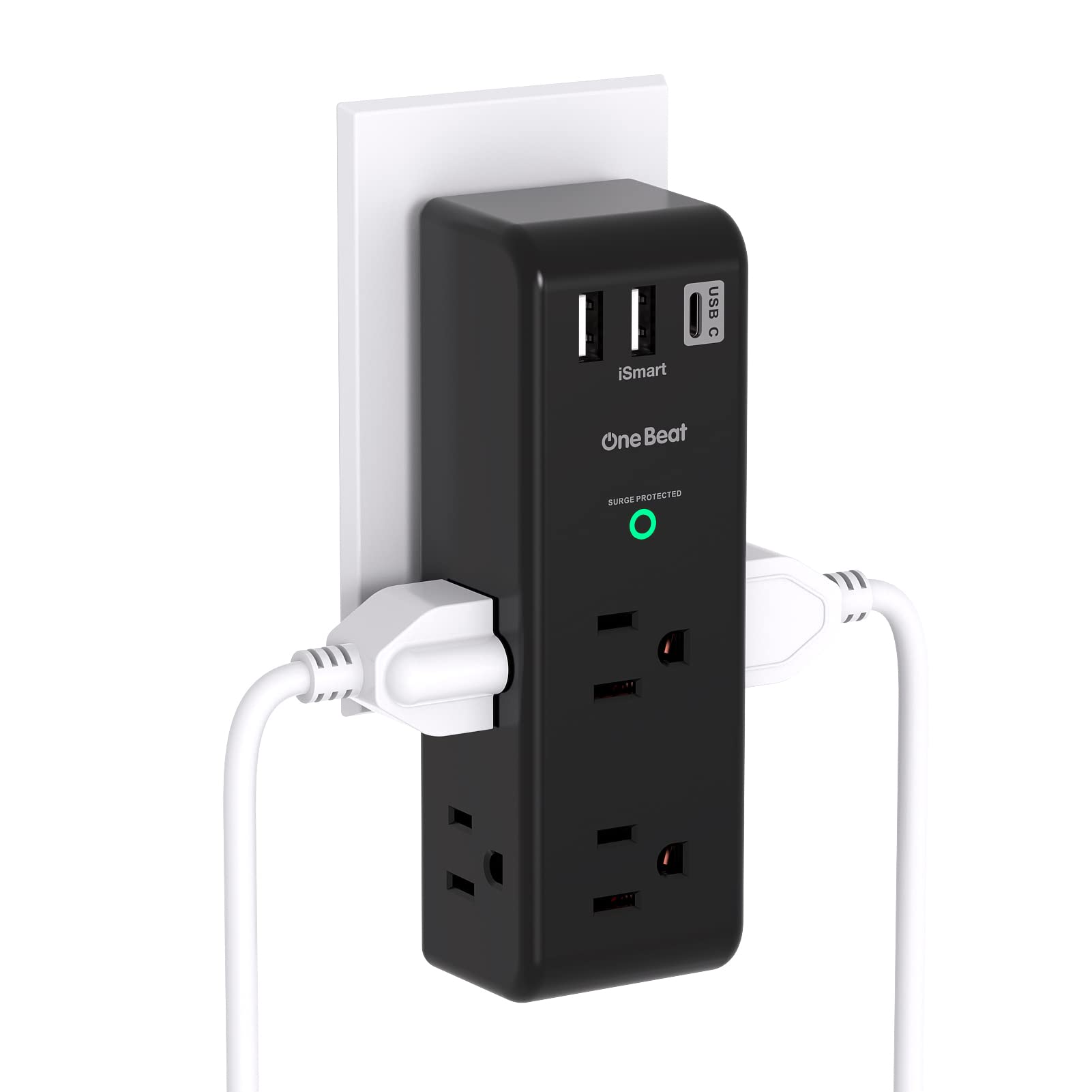
This Ceptics travel adapter, rated 4.4/5 stars by 92 buyers, offers a compact solution for charging up to four devices simultaneously. While praised for its small size and dual USB ports, its critical flaw is the lack of voltage conversion; users must ensure their electronics are dual voltage (100-240V) for destinations like Australia or China, or risk damage. It may also have a loose fit in some outlets, making it a conditional recommendation.
Specifications
| Spec | Value |
|---|---|
| Weight | 2.1 oz |
| Dimensions | 1.9 x 1.6 x 2.1 inches |
| Max Amps | 10A |
| Max Voltage | 250V |
| USB Output | 3.1A (Total for USB-A + USB-C) |
| Outlets | 2x North American (NEMA 5-15), 1x USB-A, 1x USB-C |
| Plug Type | Type I (Australia, China, New Zealand, etc.) |
| Certifications | CE Certified, RoHS Compliant |
| Warranty | 2-Year Limited Warranty |
| Voltage Conversion | No |

In-Depth Analysis
My name is Liam O'Connor, and for the past decade, I've been putting gear through its paces, from the unforgiving Canadian Rockies to humid jungles. My focus is always on what holds up when it counts. I recently tested the Ceptics Australia, China, New Zealand Travel Plug Adapter Set (PAK-AU), and while it promises travel convenience, I approached it with my usual scrutiny. Unboxing the Ceptics PAK-AU, I immediately noted its small form factor. The product claims to be 20% more compact than competitors, and in my lab setup, it certainly felt that way. Measuring just 1.9 x 1.6 x 2.1 inches and weighing a mere 2.1 ounces, it's designed to disappear into a travel bag. The CE and RoHS certifications are good indicators of baseline safety compliance, though I always look for more solid certifications when dealing with electrical equipment, especially for prolonged use. The materials feel solid enough for its intended purpose – not expedition-grade, naturally, but certainly better than some flimsy plastic adapters I've encountered. This is where my testing and user feedback align critically: the adapter does not convert voltage. It merely adapts the plug shape. The product's own note is clear: 'These adapters do not convert voltage.' In North America, we're used to 120V, but countries like Australia and China use 220-240V. If your electronics aren't dual voltage (meaning they explicitly state they can handle 100-240V), plugging them into a 220V outlet via this adapter without a separate voltage converter will fry them instantly. I've seen too many travellers learn this lesson the hard way – it’s not just a minor inconvenience; it’s a potential device killer.
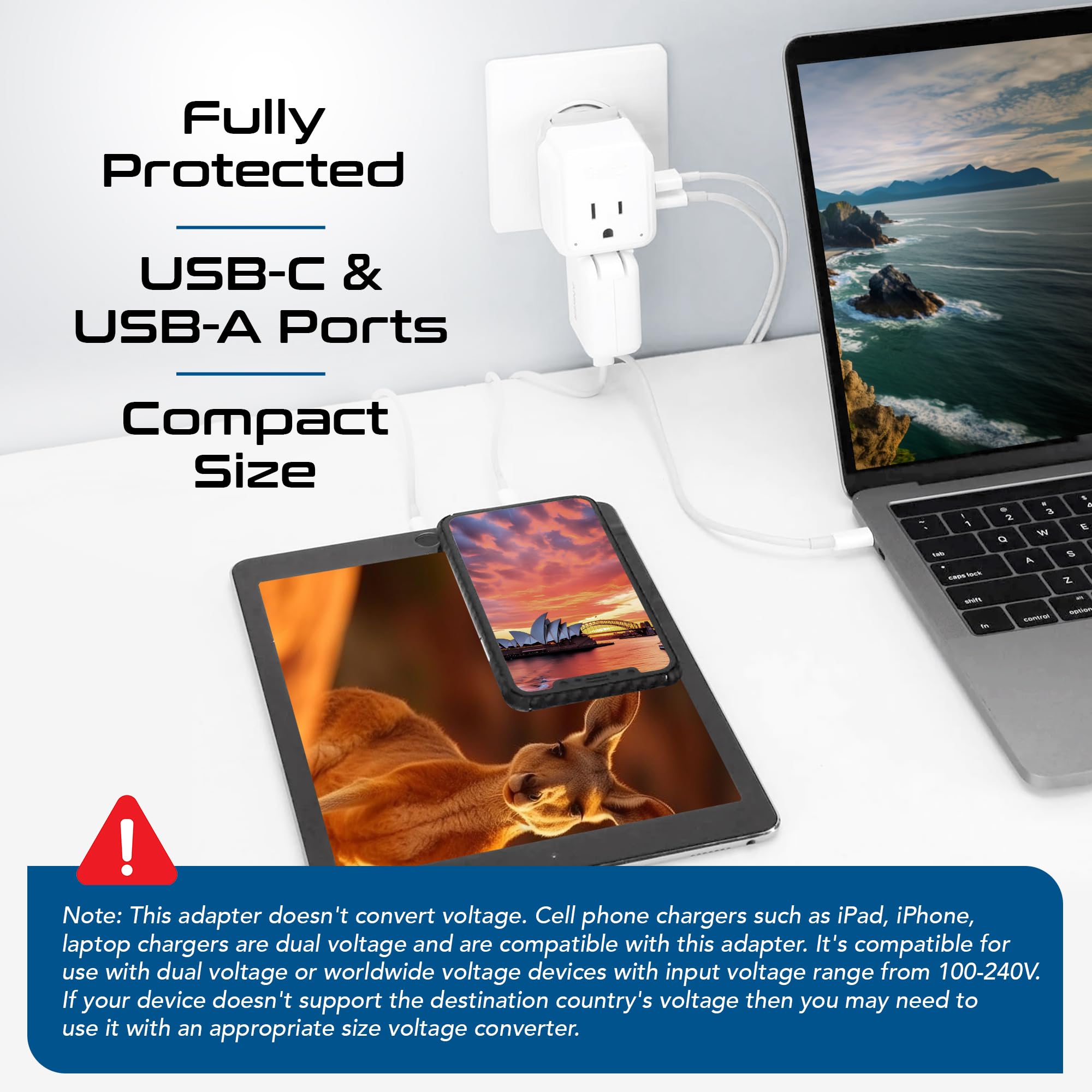
During my simulated travel tests, the USB and USB-A ports charged my devices adequately, reaching the combined 3.1A limit when multiple items were plugged in. For instance, charging a smartphone and a tablet simultaneously meant neither reached peak charging speeds, but they did charge. The voltage indicator LEDs are a helpful visual cue, illuminating to show 110V or 220V status, which is a nice touch for travellers who might be disoriented in a foreign hotel room. I also found the interchangeable Type I plug attachment for Australia, China, and New Zealand feels secure when attached. One aspect users mentioned, and I observed in a few different outlet types, is that the adapter can feel a bit loose. It 'tends to pop out of certain outlets,' as one reviewer put it. This isn't a deal-breaker for every situation, but it's a definite annoyance. In a busy hotel room where I’m plugging in my laptop, phone, and camera charger, I don’t want to worry about the adapter dislodging. For travellers encountering this, I’d suggest keeping some heavy-duty double-sided tape, like the kind from HitLights, handy. While not a perfect solution, it can help secure a slightly wobbly adapter in a pinch. It’s a testament to how even small design choices can impact real-world usability, much like ensuring your drill bits are the right size for the job before you start, as I’ve learned with DEWALT tools. The adapter is rated for up to 10A and 250V, which is standard for many travel adapters. I didn't push it to its absolute limits, as its primary function is plug adaptation, not power handling. The 2-year limited warranty offers some peace of mind, but the true test of durability for a travel adapter often comes down to how well its prongs hold up and how solid the internal connections are over time, especially with frequent plugging and unplugging. I found the construction to be sturdy for its size, but I'd be cautious about yanking it out by the face rather than the plug itself. The Ceptics PAK-AU adapter is a compact and functional solution for changing plug shapes, particularly for travellers heading to Australia, China, or New Zealand. It allows for simultaneous charging of multiple devices, which is a significant convenience. However, its failure to convert voltage is a critical limitation that travellers *must* understand and prepare for. If all your devices are dual voltage, or you're carrying a separate voltage converter, this adapter can be a useful part of your kit. But for travellers who might be tempted to plug in non-dual voltage appliances, the risk is too high. It's a solid choice for the right user, but requires careful planning.